

Your parent passed away six months ago. The trust says you’re entitled to a share of the estate. But the trustee hasn’t told you anything—no asset list, no expense reports, no timeline for distribution. When you ask questions, you get vague answers or silence. You’re starting to wonder: is something wrong?
Under California Probate Code §16062, beneficiaries have a statutory right to receive a formal trust accounting from the trustee at least annually and at the termination of the trust. If the trustee refuses to provide this information, you can petition the probate court to compel an accounting and hold the trustee liable for any breach of fiduciary duty. The California trust accounting disputes attorneys at The Legacy Lawyers help beneficiaries across the state enforce these rights.
This article explains what trust accounting means under California law, your specific rights as a beneficiary, how to challenge accounting discrepancies, and when to take legal action to protect your inheritance.
What Is a Trust Accounting Under California Law?
A trust accounting is a formal financial report that shows exactly how the trustee has managed the trust’s assets. It’s not optional—California law requires it.
Under California Probate Code §16063, a trust accounting must include:
- A statement of all trust property at the beginning of the accounting period
- All receipts and disbursements during the period
- All gains and losses on investments
- The trustee’s compensation and any expenses paid from trust assets
- A statement of all trust property at the end of the period
This isn’t a casual summary. The accounting must be detailed enough that a beneficiary can trace every dollar and verify that the trustee acted properly.
The California Supreme Court emphasized the importance of fiduciary accountability in Estate of Giraldin (2012) 55 Cal.4th 1058, holding that trustees have an absolute duty to keep beneficiaries reasonably informed about the administration of the trust. When a trustee fails to provide proper accountings, it raises immediate questions about whether they’re hiding something.
Many trust disputes begin here. A beneficiary receives an accounting that seems incomplete—large withdrawals labeled “miscellaneous expenses,” unexplained transfers to third parties, or property sold far below market value. Or the beneficiary receives nothing at all, waiting months or years while the trustee stonewalls every request.
When Must a Trustee Provide an Accounting?
California Probate Code §16062 establishes clear requirements. A trustee must provide an accounting to each beneficiary:
- At least annually
- At the termination of the trust
- Upon reasonable request by a beneficiary
- When required by court order

The trustee cannot simply decide that you don’t need this information. If you are a current beneficiary—meaning you have a present interest in the trust—you have an automatic right to accountings. The trust document itself cannot eliminate this right if you’re entitled to distributions under the trust terms.
Your Rights When a Trustee Won’t Provide an Accounting
If you’ve asked for an accounting and the trustee has ignored you, delayed indefinitely, or provided incomplete information, California law gives you several powerful tools to enforce your rights.
Demand a Formal Accounting in Writing
Start by sending a written demand to the trustee. Cite California Probate Code §16062 specifically and request a complete accounting covering the entire period of the trust administration. Keep a copy of this demand—it becomes evidence if you need to go to court.
Under §16061.5, the trustee must respond to reasonable requests for information about the trust. A formal written demand establishes that you’ve given the trustee a fair opportunity to comply before seeking court intervention.
Petition the Probate Court to Compel an Accounting
If the trustee refuses or fails to respond, you can file a petition under California Probate Code §17200 asking the court to compel an accounting. The court has broad authority to order the trustee to produce a complete accounting within a specific deadline.
This is often the turning point in trust disputes. Once a court gets involved, trustees who have been hiding problems suddenly become cooperative—or their misconduct becomes undeniable.
The petition process typically involves:
- Filing the petition with the probate court in the county where the trust is administered
- Serving the trustee with notice of the petition
- Attending a hearing where the court reviews the request
- Obtaining a court order requiring the accounting
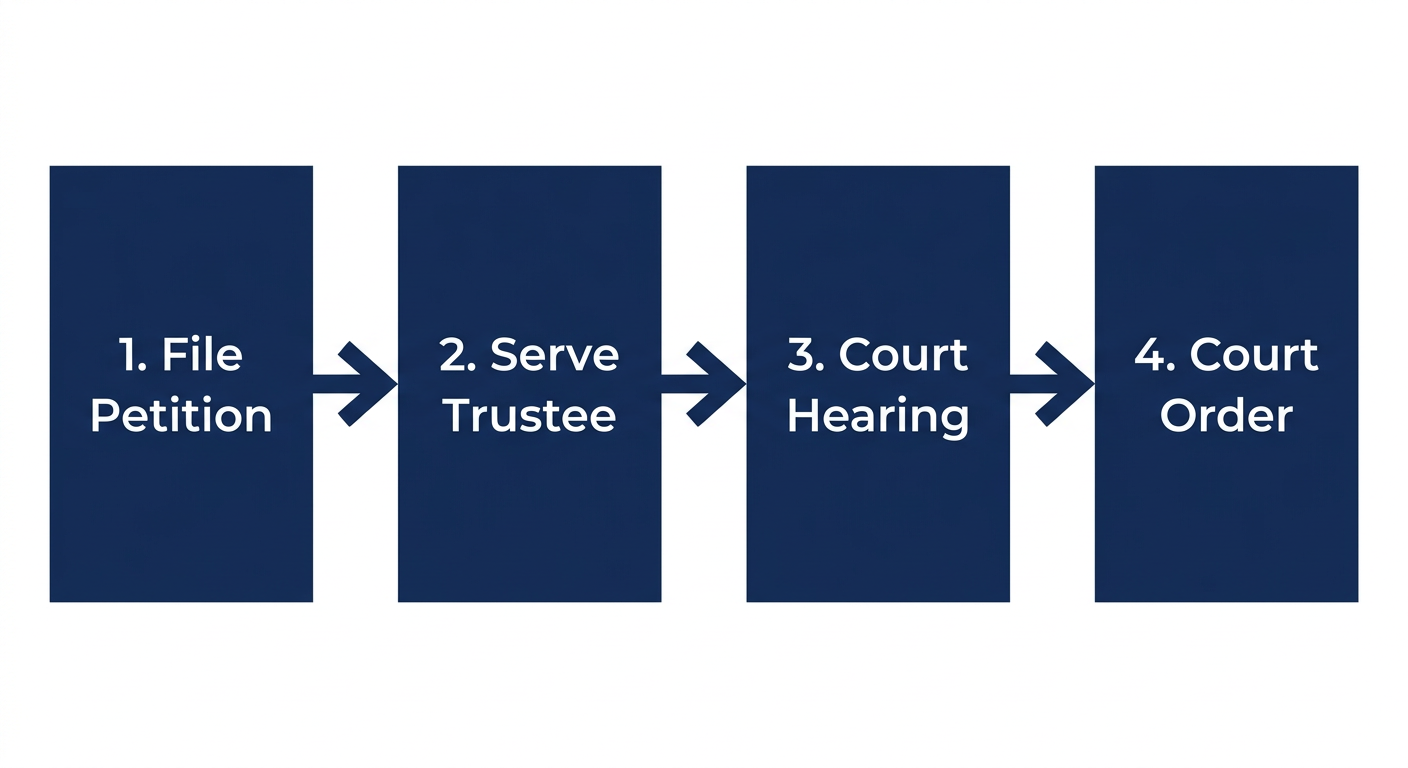
If the court orders an accounting and the trustee still refuses to comply, the trustee can be held in contempt of court—and this pattern of defiance becomes powerful evidence for trust litigation claims including breach of fiduciary duty and potential trustee removal.
Challenge Discrepancies and Suspicious Transactions
Sometimes the problem isn’t that you can’t get an accounting—it’s what the accounting reveals. Common red flags include:
- Large cash withdrawals without documentation
- Payments to the trustee’s family members or business associates
- Real estate sold below market value
- Missing assets that should be in the trust
- Excessive trustee fees
- Unexplained loans from the trust
If you see discrepancies, you have the right to object to the accounting and request a court hearing under California Probate Code §17200. At the hearing, the trustee must explain and justify every transaction. If they can’t, the court can surcharge the trustee—meaning the trustee must personally repay any losses caused by their mismanagement.
In Uzyel v. Kadisha (2010) 188 Cal.App.4th 866, the California Court of Appeal upheld a surcharge of millions of dollars against a trustee who engaged in self-dealing transactions that harmed the trust beneficiaries. Courts take accounting fraud seriously.
If you’re facing a trust accounting dispute—whether a trustee won’t provide information or the numbers don’t add up—The Legacy Lawyers can help. Get started with a consultation. We serve clients throughout California from offices in Irvine, Los Angeles, Torrance, Inland Empire, San Diego, San Francisco, and Sacramento.
How The Legacy Lawyers Help in Trust Accounting Disputes
California trust accounting disputes require attorneys who understand both the technical legal requirements and the family dynamics that often drive these conflicts. The Legacy Lawyers focus exclusively on protecting beneficiary rights in trust, probate, and estate litigation matters.
Our team—including attorneys recognized by Super Lawyers, Martindale Hubbell, and Avvo—handles accounting disputes at every stage:
- Demanding accountings: We draft formal demands that cite the specific Probate Code sections and establish a clear record of the trustee’s obligations
- Petitioning the court: We file and litigate petitions to compel accountings, ensuring the court orders complete disclosure within enforceable deadlines
- Analyzing accountings: We review accountings line by line to identify missing assets, excessive fees, self-dealing transactions, and unexplained discrepancies
- Pursuing surcharges: We hold trustees personally liable for losses caused by their mismanagement or breach of fiduciary duty
- Seeking trustee removal: When accounting failures reveal a pattern of misconduct, we pursue removal of the trustee under California Probate Code §15642
We understand that these cases aren’t just about money. They’re about family betrayal, broken promises, and the grief that comes with losing a loved one while also fighting for what they intended you to receive. The Legacy Lawyers approach every case with the empathy these situations demand and the legal precision they require.
With seven offices across California, we represent beneficiaries statewide—from Los Angeles to San Francisco, from San Diego to Sacramento.
Can a Trustee Waive the Accounting Requirement?
Some trust documents include language that appears to waive the trustee’s duty to account. Beneficiaries often wonder: does this mean I have no right to see the numbers?
The answer under California law is nuanced. While California Probate Code §16062(a) allows a trust instrument to waive certain accounting requirements for beneficiaries who are not receiving current distributions, this waiver is not absolute. Courts have held that trustees still have a duty to provide information upon reasonable request under §16061, and beneficiaries can always petition the court under §17200 to compel an accounting when there’s evidence of mismanagement.
In other words, a waiver clause may reduce the frequency of mandatory accountings, but it cannot completely shield a trustee who is mishandling assets. If you have legitimate concerns about how the trust is being managed, you retain the right to seek court intervention regardless of what the trust document says.
What Is the Statute of Limitations for Trust Accounting Claims?
Timing matters in trust disputes. Under California Probate Code §16460, a beneficiary generally has three years from the date they received an accounting to challenge the transactions it contains—if the accounting adequately disclosed the relevant information.
If the trustee never provided an accounting, or if the accounting concealed or failed to disclose the problematic transactions, the limitations period may not begin to run until you discover (or should have discovered) the breach.
This makes early action critical. If you suspect problems with how a trust is being administered, consult with a trust beneficiary attorney promptly. Waiting too long can limit your legal options—and give a dishonest trustee more time to dissipate assets.
How Long Does It Take to Resolve a Trust Accounting Dispute?
The timeline varies significantly depending on the complexity of the trust, the trustee’s cooperation, and whether the case goes to trial.
A straightforward petition to compel an accounting might be resolved in 60–90 days if the trustee complies after the court issues an order. More contested matters—where the beneficiary is challenging specific transactions or seeking trustee removal—can take 12–24 months or longer.
Many accounting disputes settle before trial once the trustee realizes that their conduct will be scrutinized by a judge. Having experienced trust litigation counsel often accelerates resolution because trustees and their attorneys recognize the strength of a well-prepared case.
What Damages Can a Beneficiary Recover?
If a court finds that the trustee breached their fiduciary duty through improper accounting practices, self-dealing, or mismanagement, the beneficiary may recover:
- Surcharges: The trustee must personally repay any losses to the trust caused by their breach
- Lost profits: If improper investments or management caused the trust to lose value, the trustee may owe the difference
- Disgorgement: If the trustee personally profited from improper transactions, they must return those profits
- Attorney’s fees: Under California Probate Code §17211, the court may order the trustee to pay the beneficiary’s reasonable attorney’s fees from the trustee’s own funds
These remedies can be substantial. In cases involving missing trust assets or fraudulent transfers, beneficiaries have recovered hundreds of thousands—even millions—of dollars in surcharges and damages.
Conclusion
As a trust beneficiary in California, you have clear legal rights to receive accurate, complete accountings of how the trustee is managing your inheritance. If a trustee refuses to provide this information, provides incomplete or misleading accountings, or the numbers reveal suspicious transactions, California law gives you powerful tools to hold them accountable.
You don’t have to accept silence, delays, or excuses. Get started with The Legacy Lawyers. We serve clients statewide from offices in Irvine, Los Angeles, Torrance, Inland Empire, San Diego, San Francisco, and Sacramento.
Frequently Asked Questions
Can I force a trustee to provide an accounting in California?
Yes. If a trustee refuses to provide an accounting, you can file a petition under California Probate Code §17200 asking the probate court to compel disclosure. The court can order the trustee to produce a complete accounting by a specific deadline and hold them in contempt if they refuse.
How long do I have to challenge a trust accounting in California?
Under California Probate Code §16460, beneficiaries generally have three years from receiving an accounting to challenge the transactions it discloses. If the accounting concealed information or was never provided, the limitations period may not begin until you discover the breach.
What should I do if a trust accounting shows suspicious transactions?
You can file objections to the accounting under California Probate Code §17200 and request a court hearing. The trustee must justify every questioned transaction. If they cannot, the court can surcharge the trustee—requiring them to personally repay losses to the trust.
Should I hire an attorney for a California trust accounting dispute?
Trust accounting disputes involve complex probate law, fiduciary standards, and court procedures. An experienced California trust litigation attorney can compel accountings, identify discrepancies, and pursue surcharges or trustee removal. The Legacy Lawyers focus exclusively on protecting beneficiary rights in these matters.