

You grew up calling them Mom or Dad. You shared holidays, family dinners, and decades of memories. Then your stepparent passes away, and you discover you may have no legal right to inherit anything—even if they never got around to updating their will or trust. For stepchildren in California, the reality of inheritance law can be devastating.
Under California Probate Code §6454, stepchildren do not automatically inherit from a stepparent unless they were legally adopted or can prove the relationship began during childhood and continued throughout their lives with the stepparent intending to adopt them but being legally prevented from doing so. Without meeting these narrow exceptions or being specifically named in a will or trust, stepchildren have no default inheritance rights in California—even in families where the bond was undeniably real.
This article explains exactly when stepchildren can inherit under California law, the legal exceptions that may apply, and what options you have if you believe you were wrongfully excluded from an estate. If you’re facing a dispute over a stepparent’s estate, The Legacy Lawyers protect beneficiary rights throughout California from seven office locations.
Understanding California’s Stepchild Inheritance Laws
California’s intestate succession laws—the rules that determine who inherits when someone dies without a valid will—do not include stepchildren in the default line of inheritance. Under California Probate Code §6402, when a person dies intestate (without a will), their estate passes first to a surviving spouse, then to children and their descendants, then to parents, then to siblings, and so on through biological or legally adopted family members.
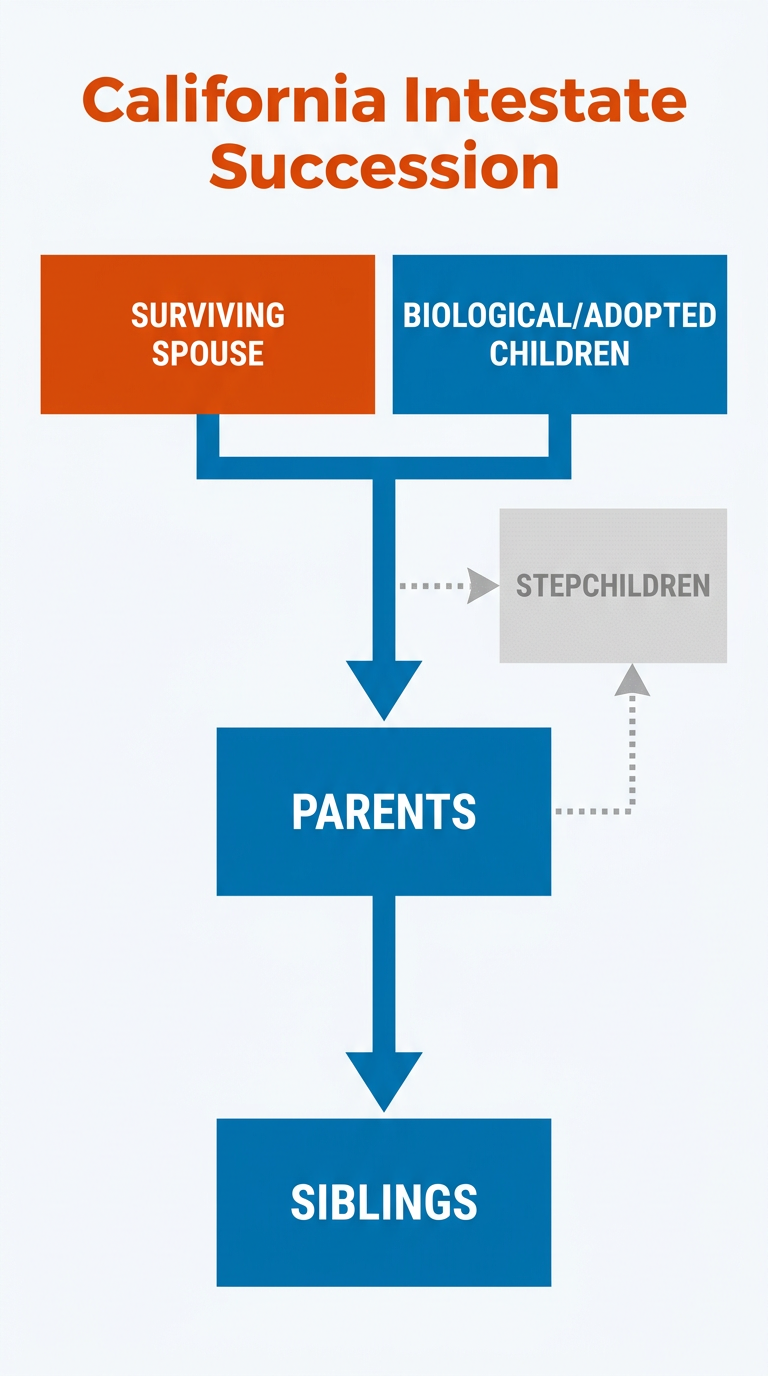
Stepchildren are notably absent from this statutory list. The law treats the term “child” to mean biological children and legally adopted children only. A stepchild who lived with their stepparent for 30 years has no more automatic inheritance rights than a complete stranger—unless specific legal conditions are met.
This creates profound problems for blended families, which now represent approximately 16% of all children in the United States according to Pew Research Center data. California courts have long recognized this tension between legal formalism and family reality, which led to the creation of limited exceptions under Probate Code §6454.
The §6454 Exception: When Stepchildren Can Inherit
California Probate Code §6454 provides the primary pathway for stepchildren to inherit from a stepparent who dies without a will. To qualify, the stepchild must prove two elements by clear and convincing evidence:
- The relationship between the stepparent and stepchild began during the stepchild’s minority (before age 18) and continued throughout their joint lifetimes
- The stepparent would have adopted the stepchild but for a legal barrier that prevented the adoption
The California Supreme Court addressed this exception in Estate of Joseph (1998) 17 Cal.4th 203, clarifying that the “legal barrier” requirement is strictly construed. Common legal barriers include situations where the biological parent refused consent to adoption, where the biological parent could not be located to terminate parental rights, or where the stepparent believed—incorrectly—that adoption was unnecessary because the stepchild would automatically inherit.
In Estate of Cleveland (2020), a California appellate court emphasized that mere emotional closeness is insufficient. The stepchild must demonstrate the stepparent took concrete steps toward adoption or expressed clear intent to adopt that was frustrated by legal obstacles beyond their control.
Equitable Adoption: A Limited Alternative
California also recognizes the doctrine of “equitable adoption,” which allows a person to inherit as if they had been legally adopted when a stepparent or foster parent made an agreement to adopt but never completed the formal process. Under Estate of Ford (2004) 32 Cal.4th 160, courts can enforce an implied contract to adopt if the child can prove:
- An express or implied agreement to adopt
- The child lived with the stepparent as their child
- The stepparent treated the child in all respects as their own
- The child relied on this relationship to their detriment
Equitable adoption claims are difficult to prove and require substantial evidence beyond testimony about the nature of the relationship. Courts look for documentation such as school records listing the stepparent as a parent, tax returns claiming the child as a dependent, insurance policies naming the stepchild as a beneficiary, and statements to third parties about the intent to adopt.
Your Rights and Options as a Stepchild in California
If your stepparent has passed away and you believe you have a valid claim to their estate, California law provides several potential avenues depending on your specific circumstances.
When You Are Named in the Will or Trust
If your stepparent specifically named you as a beneficiary in their will or trust, you have enforceable rights to receive your designated inheritance regardless of your legal relationship. The biological children or other heirs cannot exclude you simply because you were “only” a stepchild. If a trustee or executor is refusing to distribute your share, you may have grounds for a trust litigation claim or probate dispute.
When the Will or Trust Is Silent
If your stepparent’s estate plan doesn’t mention you, your options depend on whether you can establish grounds under §6454 or equitable adoption. Begin by gathering evidence that documents your relationship:
- School records, medical records, and other documents listing your stepparent as a parent
- Correspondence (letters, emails, cards) where your stepparent referred to you as their child
- Tax returns where your stepparent claimed you as a dependent
- Insurance policies, retirement accounts, or other documents naming you as a beneficiary
- Statements from witnesses who can testify to your stepparent’s intent to adopt
- Evidence of why a formal adoption never occurred—court records showing consent was denied, documentation of efforts to locate a biological parent, or other legal barriers
Under California Probate Code §8270, you have 120 days from the date probate is opened to file a claim against the estate. Missing this deadline can permanently bar your claim, so acting quickly is essential.
Contesting a Will That Excludes You
If you believe your stepparent intended to include you in their estate plan but was prevented from doing so—through undue influence by other family members, lack of mental capacity, or fraud—you may have grounds for a will contest. California Probate Code §§6100-6104 establish the requirements for a valid will, and documents executed under suspicious circumstances can be challenged.
Common grounds for contesting a will that disinherits a stepchild include:
- Undue influence by biological children or a subsequent spouse
- Lack of testamentary capacity due to dementia or cognitive decline
- Fraud or forgery in the creation or modification of estate documents
- A more recent will or trust amendment that was destroyed or hidden
If you’re facing a dispute over a stepparent’s estate—whether you were excluded from a will, a trustee is denying your claim, or you believe estate documents were executed improperly—The Legacy Lawyers can help you understand your options. Get started with a consultation. We serve clients throughout California from offices in Irvine, Los Angeles, Torrance, Inland Empire, San Diego, San Francisco, and Sacramento.
How The Legacy Lawyers Help Stepchildren Protect Their Inheritance
At The Legacy Lawyers, we understand that inheritance disputes in blended families are never just about money. They’re about recognition, belonging, and honoring relationships that mattered. When biological heirs challenge your place in a family you’ve been part of for decades, it feels like losing your parent all over again.
Our attorneys have extensive experience representing trust beneficiaries and potential heirs in complex family disputes. We help stepchildren navigate the unique evidentiary challenges of proving relationships that existed outside formal legal structures. Attorney Phillip C. Lemmons, recognized by Super Lawyers, leads a team that combines aggressive litigation skills with the sensitivity these emotionally charged cases require.
The Legacy Lawyers serve clients from Los Angeles, Orange County, San Diego, and throughout California. Our firm has been recognized by Expertise, Avvo, and Martindale Hubbell for our work protecting the rights of individuals who need to fight for their full and fair inheritance.
We don’t do estate planning—we step in when something has gone wrong and help you navigate the legal system to enforce your rights.
Do Stepchildren Automatically Inherit From a Stepparent in California?
No. Under California’s intestate succession laws (Probate Code §6402), stepchildren have no automatic inheritance rights from a stepparent. The law defines “children” as biological or legally adopted children only. A stepchild can only inherit if they were legally adopted, if they qualify under the narrow §6454 exception, or if they were specifically named as a beneficiary in a will or trust.
What Is Required to Prove a §6454 Claim in California?
To inherit from a stepparent under California Probate Code §6454, you must prove by clear and convincing evidence that: (1) your relationship with your stepparent began before you turned 18 and continued throughout both of your lifetimes, and (2) your stepparent would have adopted you but was legally prevented from doing so. Evidence like school records, tax returns, correspondence, and witness testimony about adoption intent is critical. Courts require more than emotional closeness—you need documentation of the relationship and the legal barrier to adoption.
Can I Contest a Will If My Stepparent Disinherited Me?
You may be able to contest a will if you have evidence that your stepparent lacked mental capacity, was subjected to undue influence, or if the will was the product of fraud or forgery. California Probate Code §6104 establishes that wills executed due to undue influence are invalid. If you believe your stepparent intended to include you but was manipulated by other family members, a California will contest lawyer can evaluate your case and explain your options.
Conclusion
California law does not automatically recognize stepchildren as heirs, but that doesn’t mean you have no options if you’ve been excluded from a stepparent’s estate. Whether you’re pursuing a claim under Probate Code §6454, challenging a will on grounds of undue influence, or seeking to enforce your rights as a named beneficiary, understanding the legal framework is the first step toward protecting your inheritance.
Get started with The Legacy Lawyers. We serve clients statewide from offices in Irvine, Los Angeles, Torrance, Inland Empire, San Diego, San Francisco, and Sacramento.
Frequently Asked Questions
Do stepchildren have inheritance rights in California?
Stepchildren have no automatic inheritance rights in California under Probate Code §6402. They can only inherit if they were legally adopted, qualify under the §6454 exception by proving a childhood relationship and legal barrier to adoption, or are specifically named in a will or trust.
What is equitable adoption in California?
Equitable adoption is a legal doctrine allowing someone to inherit as if legally adopted when a stepparent agreed to adopt but never completed the process. Under Estate of Ford (2004), you must prove an agreement to adopt, living as the stepparent’s child, and detrimental reliance on the relationship.
How long do I have to file a claim against my stepparent’s estate?
Under California Probate Code §8270, you generally have 120 days from the date probate is opened to file a creditor’s claim. For will contests based on undue influence or lack of capacity, different deadlines may apply. Consulting an attorney promptly after learning of the death is critical to preserve your rights.
Can a stepparent’s biological children contest my inheritance?
If you were specifically named as a beneficiary in a valid will or trust, biological children generally cannot override that designation simply because you’re a stepchild. However, they may attempt to contest the document’s validity. A trust litigation attorney can help you defend your inheritance rights.
When should I hire an attorney for a stepchild inheritance dispute?
Contact an attorney as soon as you learn your stepparent has passed and you may have been excluded from their estate. Strict deadlines apply to probate claims and will contests. The Legacy Lawyers offer consultations to help you understand whether you have a viable claim under California law.
This article references publicly available information including California Probate Code, California case law, and published legal guidance. The information provided is specific to California law and is for educational purposes only—it does not constitute legal advice or create an attorney-client relationship. Laws change and every case is unique. For guidance on your specific situation, consult a licensed California attorney. Contact The Legacy Lawyers at thelegacylawyers.com/get-started for a consultation.
