
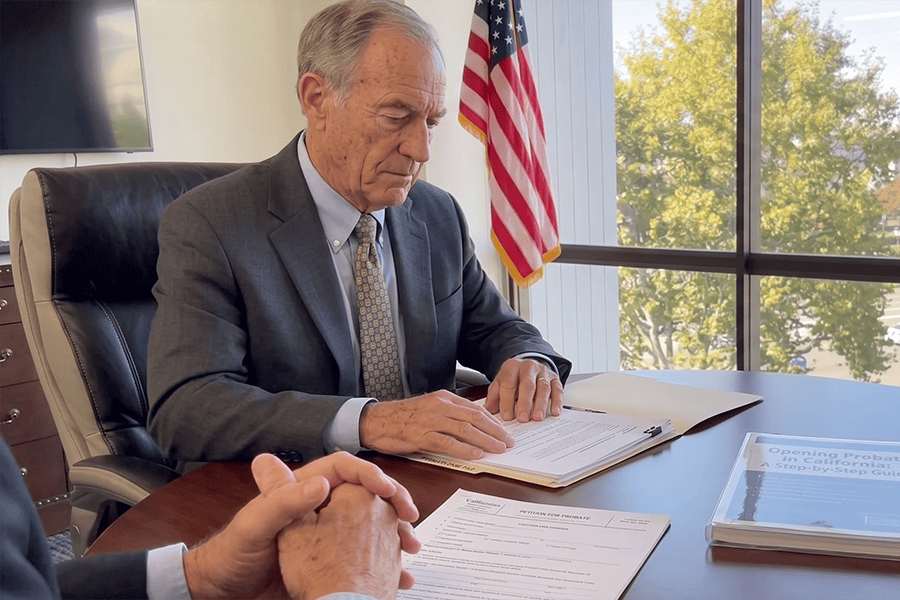
Your parent just passed away. You’re grieving, managing funeral arrangements, and fielding calls from family members asking about the estate. Then someone hands you a manila folder with your mother’s will and says, “You’re the executor. You need to open probate.”
If you’ve never navigated the California court system, that sentence can feel overwhelming. But here’s what you need to know: To open probate with a will in California, you must file a Petition for Probate (Judicial Council Form DE-111) with the Superior Court in the county where the deceased resided. Under California Probate Code §8000, the court will then schedule a hearing—typically 30 to 45 days later—to validate the will and appoint an executor to administer the estate.
This guide walks you through each step of the California probate process when there’s a valid will. The Legacy Lawyers help families across California navigate probate, protect their inheritance rights, and resolve estate disputes—and this article explains exactly what the law requires.
Understanding the California Probate Process With a Will
Probate is the legal process through which a California court validates a deceased person’s will, authorizes an executor to act on behalf of the estate, and oversees the distribution of assets to beneficiaries. When someone dies with a will (called dying “testate”), probate ensures the will is authentic, the named executor is qualified, and the estate is administered according to both the will’s terms and California law.
Under California Probate Code §8200, probate is generally required when a deceased person owned assets valued at more than $184,500 that were held solely in their name—without a trust, joint ownership, or beneficiary designation. If the estate falls below this threshold, a simplified process may be available under Probate Code §13100.
The probate court’s role is supervisory. The court doesn’t manage the estate directly—the executor does. But the court ensures the executor follows the law: notifying creditors, paying valid debts, filing accountings, and ultimately distributing assets only after court approval.
Here’s how this plays out in real families: Imagine a father dies in Orange County with a home, a brokerage account, and a checking account—all in his name alone. His will names his eldest daughter as executor and divides everything equally among three children. Even with a clear will, the daughter cannot access the brokerage account, sell the house, or distribute funds until the probate court formally appoints her as executor and grants her authority to act.
This process protects beneficiaries. It creates a legal record, ensures creditors are paid before heirs, and gives anyone who disputes the will an opportunity to be heard. According to Caring.com’s 2024 survey, only about 32% of Americans have a will—meaning most families face probate under intestacy laws. When a will exists, the process is typically more straightforward, but it still requires careful attention to California’s procedural requirements.
Your Rights and Options as Executor or Beneficiary
If you’ve been named executor in a California will, you have both significant authority and serious legal obligations. Under California Probate Code §8400, the person named as executor in the will has priority to be appointed by the court—but you’re not required to serve. You can decline, and the court will appoint an alternate or an administrator.
If you choose to serve, here’s what California law requires:
- File the original will with the court. Under Probate Code §8200, the person having custody of a will must deliver it to the superior court clerk within 30 days of learning of the death.
- File a Petition for Probate. Use Judicial Council Form DE-111 to request appointment as executor and ask the court to admit the will to probate.
- Provide notice to heirs and beneficiaries. Probate Code §8110 requires you to notify all heirs and beneficiaries named in the will at least 15 days before the hearing.
- Publish notice to creditors. Under Probate Code §8120, you must publish a notice in a newspaper of general circulation to alert potential creditors.
If you’re a beneficiary rather than the executor, you have important rights too. You’re entitled to receive notice of the probate petition, attend the hearing, and object if you believe the will is invalid or the proposed executor is unfit. Under Probate Code §8250, any interested person can contest the will’s validity on grounds including lack of capacity, undue influence, or fraud.
Timing matters. California law imposes strict deadlines throughout probate. If you’re an executor who delays filing, creditors or beneficiaries may petition to have someone else appointed. If you’re a beneficiary who believes the will was obtained through undue influence, you must raise that challenge during the probate process—not after assets have been distributed.
Understanding these rights early gives you leverage. Whether you’re stepping into the executor role or watching someone else administer an estate where you’re a beneficiary, knowing what the law requires helps you protect your interests.
If you’re facing questions about opening probate, challenging an executor’s actions, or protecting your inheritance, The Legacy Lawyers can help. We serve families throughout California from seven offices in Irvine, Los Angeles, Torrance, Inland Empire, San Diego, San Francisco, and Sacramento.
Step-by-Step: How to Open Probate With a Will in California
The California probate process follows a defined sequence. Here’s what happens from the moment someone passes away through the court’s initial orders:
Step 1: Locate and Secure the Original Will
California courts require the original will—not a copy. Check the deceased’s home, safe deposit box, or attorney’s files. Under Probate Code §8200, whoever has custody of the will must file it with the superior court within 30 days of learning of the death, even if they don’t plan to serve as executor.
Step 2: Determine the Correct Court
File in the superior court of the county where the deceased was a resident at the time of death. If the deceased owned real property in California but lived out of state, you may file in the county where the property is located. California Probate Code §7051 establishes these venue rules.
Step 3: Complete the Required Forms
The California Courts provide standardized Judicial Council forms. For opening probate with a will, you’ll typically need:
- DE-111: Petition for Probate
- DE-121: Notice of Petition to Administer Estate
- DE-140: Order for Probate (prepared for the judge’s signature)
- DE-147: Duties and Liabilities of Personal Representative
The petition requires detailed information: the deceased’s date of death, last residence, names and addresses of all heirs and beneficiaries, and an estimate of the estate’s value.
Step 4: File the Petition and Pay Filing Fees
Submit your completed petition and the original will to the court clerk. Filing fees vary by county but typically range from $435 to $500 for a standard probate petition. The clerk will assign a case number and schedule a hearing date—usually 30 to 45 days out.
Step 5: Provide Notice to Interested Parties
Under Probate Code §8110, you must mail notice of the hearing to all heirs and beneficiaries at least 15 days before the hearing date. You’ll also need to publish notice in a local newspaper for three successive weeks under Probate Code §8120 to notify potential creditors.
Step 6: Attend the Probate Hearing
At the hearing, the judge reviews the petition, confirms the will meets California’s legal requirements, and—if no objections are raised—issues orders admitting the will to probate and appointing the executor. You’ll receive Letters Testamentary, the legal document that gives you authority to act on behalf of the estate.
How The Legacy Lawyers Help With California Probate
Opening probate with a will sounds straightforward on paper. In practice, families often encounter complications: a beneficiary contests the will, an heir can’t be located, assets are harder to value than expected, or the executor feels overwhelmed by fiduciary responsibilities.
The Legacy Lawyers focus on trust, probate, and estate litigation throughout California. Our attorneys—including Phillip C. Lemmons (recognized by Super Lawyers) and a team with deep experience in beneficiary rights and trust administration—help families navigate every stage of probate.
We represent executors who need guidance on their fiduciary duties and court requirements. We also represent beneficiaries who believe an executor is mismanaging the estate, delaying distributions, or failing to provide required accountings. When disputes arise—whether over the validity of a will, the interpretation of its terms, or an executor’s conduct—we litigate to protect our clients’ rights.
Our firm has earned recognition from Martindale Hubbell, Avvo, Expertise, and the Orange County Bar Association. With seven California offices in Irvine, Los Angeles, Torrance, Inland Empire, San Diego, San Francisco, and Sacramento, we serve clients statewide.
We understand that probate isn’t just paperwork. It’s often happening while you’re grieving, managing family dynamics, and trying to honor someone’s final wishes. Our role is to handle the legal complexity so you can focus on what matters.
Legal Questions About California Probate
How long does probate take in California with a will?
California probate typically takes 9 to 18 months, though complex or contested estates may take longer. Under Probate Code §12200, creditors have four months from the date Letters Testamentary are issued to file claims, which sets a minimum timeline. The court must also approve the executor’s final accounting and proposed distribution before the estate can close.
What documents do I need to file for probate in California?
You’ll need the original will, a certified copy of the death certificate, and several Judicial Council forms including the Petition for Probate (DE-111), Notice of Petition (DE-121), and Order for Probate (DE-140). Additional documents may be required depending on the estate’s assets and whether any heir or beneficiary contests the proceeding.
Can I handle California probate without an attorney?
California law allows individuals to represent themselves in probate court. However, probate involves strict deadlines, fiduciary duties, and potential personal liability for executors who make mistakes. The California Courts self-help center provides resources, but for estates with significant assets, real property, or any potential for dispute, working with an experienced California probate attorney is strongly recommended.
Conclusion
Opening probate with a will in California requires careful attention to Probate Code requirements—from filing the petition within the correct timeframe to providing proper notice to all interested parties. The court process exists to protect beneficiaries and ensure the estate is administered according to both the decedent’s wishes and California law.
Whether you’re serving as executor or watching the process as a beneficiary, you don’t have to navigate probate alone. Get started with The Legacy Lawyers. We serve clients statewide from offices in Irvine, Los Angeles, Torrance, Inland Empire, San Diego, San Francisco, and Sacramento.
Frequently Asked Questions
How much does it cost to open probate in California?
Filing fees for a California probate petition typically range from $435 to $500 depending on the county. Additional costs include publication fees for creditor notice, certified copies of court orders, and potentially bond premiums if the court requires the executor to be bonded. Attorney fees in probate are often set by California Probate Code §10810 as a percentage of the estate’s value.
What happens if someone contests the will during California probate?
Under California Probate Code §8250, any interested person can file a will contest on grounds such as lack of testamentary capacity, undue influence, fraud, or improper execution. The probate court will hold a hearing to evaluate the evidence. If the contest succeeds, the court may invalidate the will—meaning the estate would pass under a prior valid will or California’s intestacy laws.
Do all assets go through probate in California?
No. Assets held in a living trust, jointly owned property with right of survivorship, accounts with designated beneficiaries (like life insurance or retirement accounts), and assets below the $184,500 threshold may pass outside probate. Only assets solely in the deceased’s name without a beneficiary designation typically require court supervision.
What are an executor’s duties in California probate?
An executor must locate and secure estate assets, notify beneficiaries and creditors, pay valid debts and taxes, file court accountings, and distribute remaining assets according to the will. Under California Probate Code §9600, executors have a fiduciary duty to act in the estate’s best interest. Breach of this duty can result in personal liability and removal.
When should I hire a California probate attorney?
Consider hiring an attorney if the estate includes real property, exceeds $184,500 in value, involves potential disputes among heirs, or if you’re uncertain about executor duties and deadlines. The Legacy Lawyers help executors and beneficiaries throughout California navigate probate efficiently and protect their legal rights.