

Your mother changed her trust three weeks before she died. She left everything to a caregiver she’d known for six months—cutting out her children entirely. She was frail, isolated, and dependent on this person for daily care. Something feels deeply wrong, but you’re not sure whether the law can help.
Under California law, undue influence occurs when someone uses excessive pressure to override another person’s free will in making estate planning decisions. California Probate Code §86 defines undue influence as pressure that overcomes the victim’s judgment, and courts can invalidate wills or trusts created under such conditions. If you suspect a loved one’s estate documents were the product of manipulation rather than genuine intent, California law provides specific remedies to challenge those documents and protect the decedent’s true wishes.
This article explains how California courts identify undue influence, what evidence supports a successful challenge, and how The Legacy Lawyers’ trust litigation team helps families protect their inheritance rights when manipulation has corrupted an estate plan.
What Undue Influence Means Under California Probate Code
California Probate Code §86 provides the statutory definition of undue influence in estate matters. The law describes it as “excessive persuasion that causes another person to act or refrain from acting by overcoming that person’s free will and results in inequity.” This isn’t about ordinary persuasion or even persistent requests—it’s about pressure so overwhelming that the person making the will or trust no longer acts according to their own judgment.
Courts examine undue influence through four specific factors under Probate Code §86:
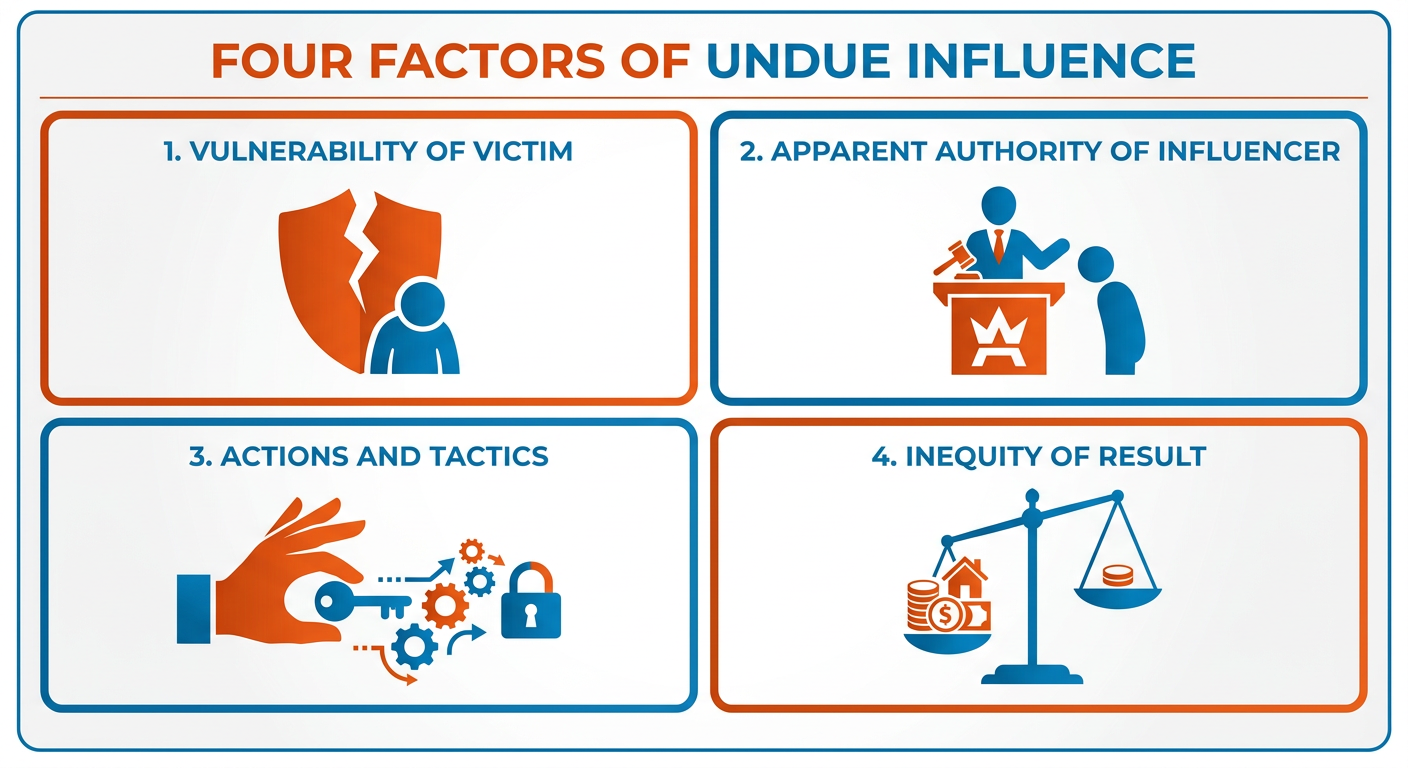
California courts weigh these four factors to determine if undue influence occurred.
- Vulnerability of the victim — age, illness, isolation, cognitive decline, emotional distress, or dependency on the influencer
- Apparent authority of the influencer — a position of trust such as caregiver, family member, financial advisor, or anyone the victim relies upon
- Actions and tactics of the influencer — controlling necessities, isolating the victim, changing documents, disparaging other beneficiaries, or timing document changes when the victim is weakest
- Inequity of the result — an estate plan that dramatically departs from prior versions, excludes natural heirs, or benefits the influencer disproportionately
The California Supreme Court’s decision in Rice v. Clark (2002) 28 Cal.4th 89 established that these factors must be considered together—no single element is required, and courts weigh the totality of circumstances. A pattern of behavior matters more than any isolated incident.
In David v. Hermann (2005) 129 Cal.App.4th 672, the court found undue influence where a caregiver isolated an elderly woman from family, controlled her access to medication, and had her sign a new trust naming the caregiver as sole beneficiary—all while the woman was in declining health and dependent on the caregiver for basic needs.
Understanding this legal framework is essential because undue influence cases turn on demonstrating a pattern of conduct, not a single dramatic event. The influencer rarely announces their intentions. Instead, the manipulation unfolds gradually—a slow erosion of the victim’s autonomy that California courts have learned to recognize.
Your Rights to Challenge a Will or Trust Based on Undue Influence
If you believe a loved one’s estate documents were created through undue influence, California law gives you specific legal tools to challenge those documents and potentially restore the estate plan that reflects the decedent’s true intentions.
Who can bring a challenge: Under California Probate Code §48, any “interested person” may contest a will or trust. This includes named beneficiaries, heirs who would inherit under intestacy laws, prior beneficiaries who were removed or reduced, and fiduciaries such as executors or trustees.
Burden of proof shifting under Probate Code §21380: California law creates a powerful presumption of undue influence when the document makes a “donative transfer” to certain individuals. Under Probate Code §21380, if a will or trust benefits someone who drafted the document, had a fiduciary relationship with the transferor, or was a care custodian of a dependent adult, the burden shifts to that beneficiary to prove the transfer was not the product of undue influence.
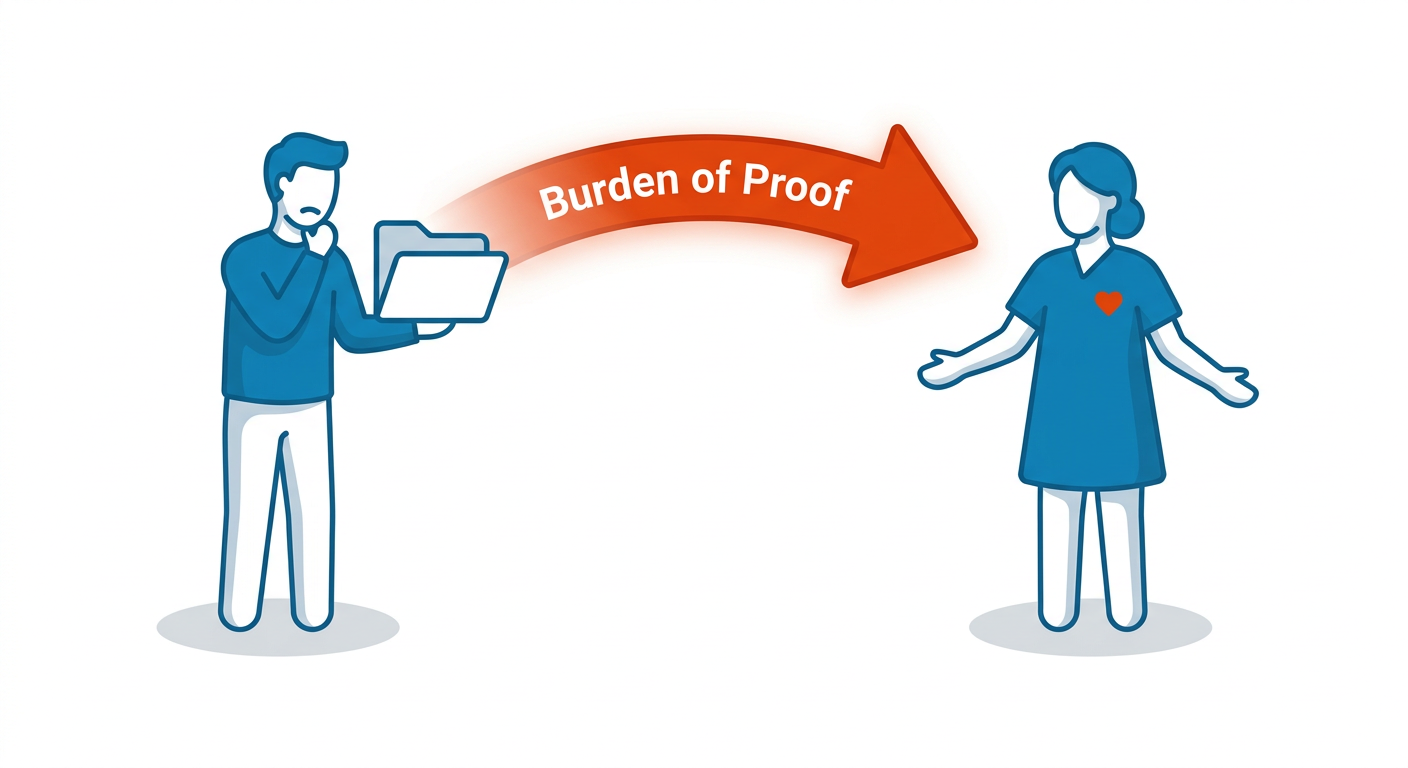
Under Probate Code §21380, the legal burden shifts to the beneficiary to prove a transfer was legitimate.
This burden-shifting provision, sometimes called California’s “certificate of independent review” rule, means that if your mother’s caregiver benefits from a trust amendment, the caregiver must prove the amendment was legitimate—you don’t have to prove it wasn’t. This protection exists because California lawmakers recognized that vulnerable adults are frequent targets of exploitation.
Evidence that supports an undue influence claim:
- Medical records documenting cognitive decline, dementia diagnosis, or medication affecting judgment
- Witness testimony about isolation tactics—who controlled visits, phone calls, or mail
- Prior estate planning documents showing dramatic changes close to death
- Financial records revealing transfers, gifts, or account access given to the alleged influencer
- Evidence that the beneficiary arranged for the attorney, attended document signings, or directed the terms
Timing matters: Will contests must generally be filed within 120 days after the will is admitted to probate, under California Probate Code §8270. Trust contests have different deadlines—typically within 120 days of receiving notice that the trust has become irrevocable (often upon the settlor’s death), per Probate Code §16061.7. Missing these deadlines can permanently bar your claim, which is why acting promptly to consult with a California trust litigation attorney is critical.
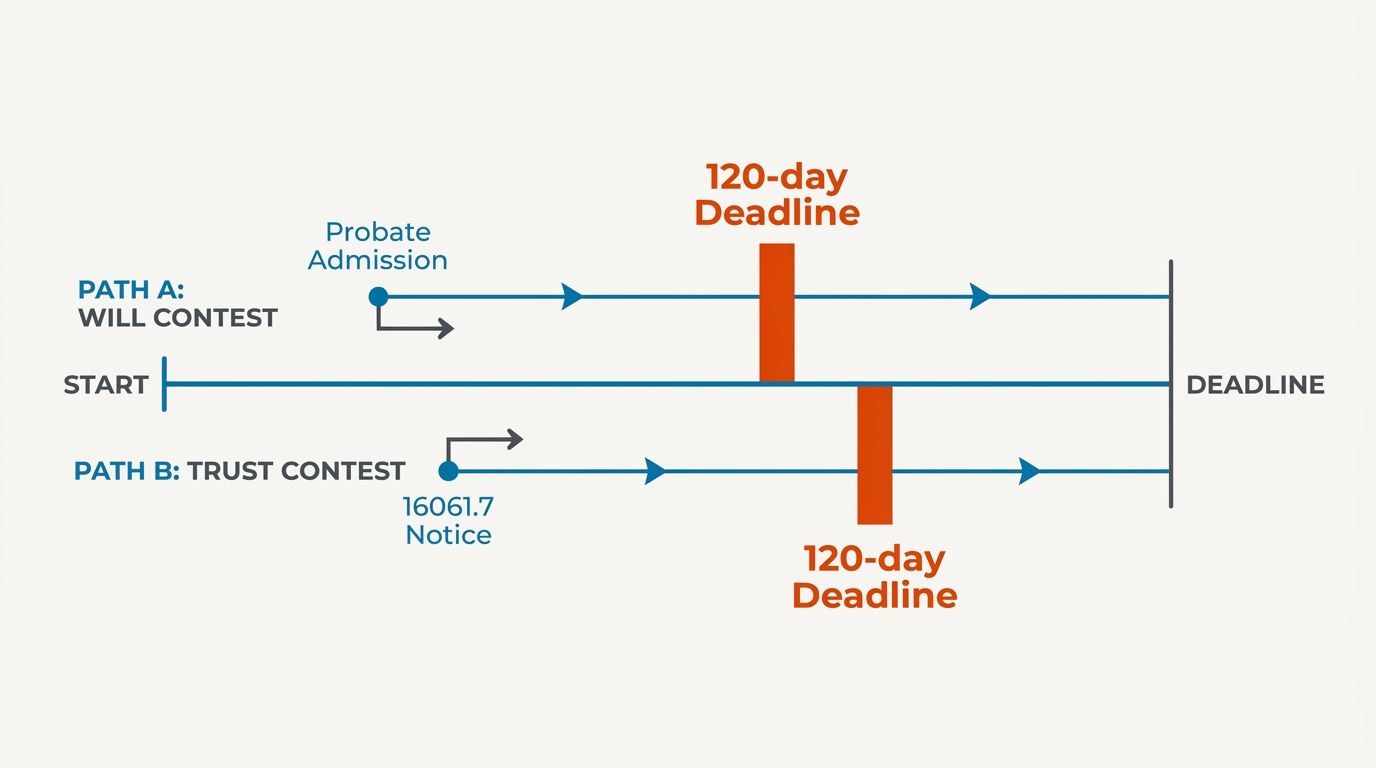
Filing deadlines are strict; missing these windows can permanently bar your claim.
If you’re concerned that a loved one’s estate plan was corrupted by manipulation, The Legacy Lawyers can evaluate your situation and explain your legal options. Get started with a consultation—we serve clients throughout California from offices in Irvine, Los Angeles, Torrance, Inland Empire, San Diego, San Francisco, and Sacramento.
How The Legacy Lawyers Protect Families From Undue Influence
Undue influence cases are emotionally complex and factually demanding. You’re not just litigating a legal technicality—you’re telling the story of how someone exploited your loved one’s vulnerability and betrayed their trust. The Legacy Lawyers understand that this is personal, not just procedural.
Our team of California trust litigation attorneys approaches undue influence cases by building comprehensive evidence portfolios that show courts the full pattern of manipulation. We obtain medical records, interview witnesses who observed changes in your loved one’s behavior, analyze financial transactions, and compare estate planning documents over time to demonstrate how the influencer corrupted the decedent’s true intentions.
Attorneys at The Legacy Lawyers have received recognitions including Super Lawyers designations, Martindale Hubbell ratings, and Avvo ratings—reflecting a commitment to excellence in California probate and trust litigation. We focus exclusively on protecting beneficiary rights and fighting for families who’ve been wronged by trustees, caregivers, or others who abused positions of trust.
With seven office locations across California—Irvine, Los Angeles, Torrance, Inland Empire, San Diego, San Francisco, and Sacramento—we represent clients statewide in trust contests, will contests, and elder abuse claims involving undue influence. We know these cases require sensitivity to the grief you’re experiencing while maintaining the aggressive advocacy needed to recover what’s rightfully yours.
What Are the Warning Signs of Undue Influence?
Recognizing undue influence often begins before a loved one passes away. California courts look at patterns of behavior, and families frequently notice troubling signs in real-time—even if they don’t realize the legal significance until later.
Isolation from family and friends is one of the most common tactics. The influencer may discourage visits, intercept phone calls, or move the victim to a new location where they have no support network. In Bernard v. Foley (2006) 39 Cal.4th 794, the California Supreme Court emphasized that isolation is a significant factor because it removes the victim from people who might question the influencer’s conduct.
Sudden changes to estate documents—especially when the victim is ill, hospitalized, or experiencing cognitive decline—raise immediate red flags. If your parent signed a new trust naming a recent acquaintance as beneficiary while recovering from surgery, that timing alone supports an undue influence investigation.
Control over daily needs creates dependency that influencers exploit. When someone controls medication, transportation, meals, or finances, the victim becomes afraid to oppose them. California Probate Code §86 specifically identifies this control over necessities as evidence of undue influence tactics.
Additional warning signs include the influencer being present at attorney meetings, selecting the attorney, or providing instructions about document contents. If the victim can’t explain their estate plan in their own words or defers to the influencer when asked about it, courts treat this as evidence that the victim’s free will was overridden.
Can You Contest a Trust for Undue Influence After the Settlor Dies?
Yes. California Probate Code §17200 permits interested persons to petition the court to contest a trust’s validity, including challenges based on undue influence. Upon the settlor’s death, the trust becomes irrevocable, and beneficiaries typically receive a notification under Probate Code §16061.7 informing them of their rights—including the right to contest the trust within 120 days.
Trust contests for undue influence follow similar evidentiary standards as will contests. You must demonstrate that the trust provisions at issue resulted from excessive persuasion that overcame the settlor’s free will. Courts consider the same four factors from Probate Code §86 and apply the same burden-shifting rules under Probate Code §21380 when applicable.
Evidence preservation becomes critical immediately after learning of suspicious trust provisions. Medical records, financial statements, and witness memories all degrade over time. If you suspect undue influence, consulting with a California trust litigation attorney promptly ensures that evidence is gathered while it remains available.
How Do California Courts Determine If Undue Influence Occurred?
California courts evaluate undue influence claims by examining the totality of circumstances surrounding the document’s execution. Under Rice v. Clark (2002) 28 Cal.4th 89, courts apply a multi-factor analysis that weighs all available evidence rather than requiring proof of any single element.
Judges consider the relationship between the alleged influencer and the victim, the victim’s mental and physical condition at the time documents were signed, whether the victim was isolated from other family members, and whether the resulting estate plan departs significantly from prior versions. The more factors present, the stronger the inference of undue influence.
Expert testimony often plays a crucial role. Forensic psychologists can analyze medical records and offer opinions about the victim’s susceptibility to influence. Forensic accountants can trace financial transactions that demonstrate exploitation. The Legacy Lawyers work with qualified experts to build compelling cases that satisfy California’s evidentiary standards.
What Remedies Are Available If Undue Influence Is Proven?
When California courts find that a will or trust was executed under undue influence, the primary remedy is invalidation of the tainted provisions. Under California Probate Code §6104, courts may set aside all or part of a will that resulted from undue influence. For trusts, courts have broad authority under Probate Code §17200 to modify, reform, or invalidate trust provisions procured through improper means.
If the influenced document is invalidated, the estate typically passes according to a prior valid estate plan—if one exists—or under California’s intestacy laws if no prior plan exists. This means the decedent’s natural heirs often recover their inheritance once the corrupted document is set aside.
In cases involving financial exploitation of an elder or dependent adult, additional remedies may be available under California’s Elder Abuse and Dependent Adult Civil Protection Act (Welfare & Institutions Code §15600 et seq.). Successful plaintiffs may recover attorney’s fees and, in cases of reckless or intentional conduct, enhanced damages. These provisions give teeth to California’s commitment to protecting vulnerable adults from exploitation.
The Legacy Lawyers evaluate every case for all available remedies, ensuring that families not only recover their rightful inheritance but also hold bad actors accountable for their conduct.
Conclusion
Undue influence corrupts estate plans and betrays the intentions of people who trusted the wrong person at their most vulnerable moment. California law recognizes this injustice and provides specific remedies—statutory presumptions that shift the burden to suspected influencers, clear evidentiary standards, and court authority to invalidate tainted documents and restore the decedent’s true wishes.
If you suspect that a loved one’s will or trust was the product of manipulation rather than genuine intent, you have legal options. Get started with The Legacy Lawyers. We represent families throughout California from offices in Irvine, Los Angeles, Torrance, Inland Empire, San Diego, San Francisco, and Sacramento—and we’re ready to fight for your rightful inheritance.
Frequently Asked Questions
What is the legal definition of undue influence in California?
Under California Probate Code §86, undue influence is “excessive persuasion that causes another person to act or refrain from acting by overcoming that person’s free will and results in inequity.” Courts evaluate four factors: the victim’s vulnerability, the influencer’s apparent authority, the influencer’s tactics, and whether the result is inequitable.
How long do I have to contest a will for undue influence in California?
Under California Probate Code §8270, you generally have 120 days after the will is admitted to probate to file a will contest. Trust contests typically must be filed within 120 days of receiving the notification required under Probate Code §16061.7. Missing these deadlines may permanently bar your claim.
What evidence do I need to prove undue influence in California?
Helpful evidence includes medical records showing cognitive decline, testimony about isolation tactics, prior estate documents demonstrating dramatic changes, financial records revealing exploitation, and evidence that the beneficiary controlled the estate planning process. California courts consider all circumstances together under the Rice v. Clark standard.
Does California law create a presumption of undue influence?
Yes. Under California Probate Code §21380, transfers to someone who drafted the document, had a fiduciary relationship with the transferor, or was a care custodian of a dependent adult create a presumption of undue influence. The beneficiary must then prove the transfer was legitimate.
When should I hire an attorney for an undue influence case?
Consult an attorney as soon as you suspect undue influence—ideally before statutory deadlines expire. The Legacy Lawyers can evaluate your situation, preserve critical evidence, and explain your options for challenging a will or trust that resulted from manipulation.
