

Minoo Meiri received a trustee notification informing her that her family trust had been amended. She believed the amendment was procured through undue influence and fraud. She had evidence. She had grounds. But she filed her contest 230 days after receiving the notification — 110 days past the 120-day statutory deadline. In Meiri v. Shamtoubi (2022) 81 Cal.App.5th 606, the Second District Court of Appeal ruled that her untimely filing automatically lacked probable cause, triggered the trust’s no-contest clause, and resulted in her complete disinheritance. She lost her entire inheritance — not because her claims were weak, but because she was late. The 120-day trust contest deadline is the single most dangerous timeline in California trust litigation. Missing it can permanently bar your right to challenge a trust, and when a no-contest clause is present, it can cost you everything you would have received. Here is exactly when the clock starts, when it can be extended, what claims are exempt, and what you should do in the first 48 hours after receiving a trustee notification.
When the 120-Day Clock Starts
The 120-day trust contest deadline is established by Probate Code §16061.8, which provides that no person served with a trustee notification under §16061.7 may bring an action to contest the trust more than 120 days from the date the notification is served.
The clock does not start on the date the settlor dies. It does not start on the date the trust becomes irrevocable. It starts on the date the trustee notification is served on you. This distinction matters enormously because a gap of weeks or months can exist between the settlor’s death and the date the trustee actually sends the notification.
Under §16061.7(f), the trustee must serve the notification within 60 days of the event that triggers the duty — typically the settlor’s death or the trust becoming irrevocable. But trustees frequently miss this 60-day window. Some delay for months. Some never send the notification at all. The consequences of these failures fall primarily on the trustee, not the beneficiary — a critical point addressed below.
What the Trustee Notification Must Contain
Probate Code §16061.7 specifies exactly what the trustee notification must include. An incomplete notification may not start the 120-day clock. The required elements are:
- The identity of the settlor or settlors of the trust and the date of execution of each trust instrument
- The name, mailing address, and telephone number of each trustee
- The address of the physical location where the principal trust administration is carried out
- Any additional information the trustee deems reasonably necessary to identify the trust
- A statement that the recipient is entitled to receive a copy of the terms of the trust from the trustee
- For notifications triggered by a settlor’s death: a warning in not less than 10-point boldface type stating the 120-day contest deadline language verbatim as prescribed by §16061.7(h)
That boldface warning must read: “You may not bring an action to contest the trust more than 120 days from the date this notification by the trustee is served upon you or 60 days from the date on which a copy of the terms of the trust is delivered to you during that 120-day period, whichever is later.”
If the notification omits any required element — particularly the boldface warning — a trust litigation attorney can argue that the notification is defective and that the 120-day period never properly commenced. This is a fact-specific determination that courts evaluate case by case.
The 60-Day Extension: How It Works
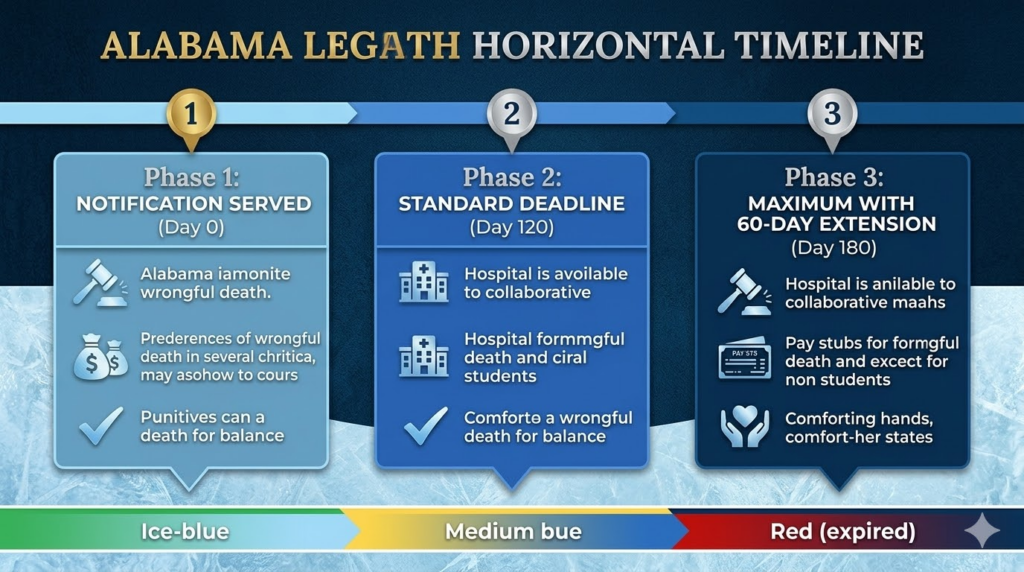
The 120-day deadline contains a built-in extension that many beneficiaries and even some attorneys overlook. Under §16061.8, the contest period is the later of 120 days from the date the notification is served, or 60 days from the date a copy of the terms of the trust is delivered to the beneficiary during that 120-day period.
Here is how this plays out in practice:
Scenario 1: The trustee serves the notification on Day 1 and includes a complete copy of the trust document. The deadline is 120 days from Day 1. The 60-day extension does not apply because the trust was delivered on the same day as the notification.
Scenario 2: The trustee serves the notification on Day 1 but does not include the trust document. The beneficiary requests and receives the trust on Day 100. The deadline extends to Day 160 (Day 100 + 60 days) — because 60 days from delivery of the trust terms is later than 120 days from notification.
Scenario 3: The trustee serves the notification on Day 1. The beneficiary receives the trust document on Day 50. The deadline remains 120 days from Day 1 — because 60 days from delivery (Day 110) is earlier than 120 days from notification (Day 120).
The practical lesson: if you receive a trustee notification without a copy of the trust, request the trust immediately. If the trustee delivers it late in the 120-day period, your contest window may extend beyond 120 days. But you should never rely on this extension as your primary strategy — the safest approach is to treat 120 days from the notification as the hard deadline and act well before it expires.
What Happens If the Trustee Never Sends the Notification
This is one of the most frequently asked questions in California trust litigation, and the answer is straightforward: if the trustee never serves the §16061.7 notification, the 120-day contest period never starts.
Under §16061.9, a trustee who fails to serve the required notification is responsible for all damages, attorney’s fees, and costs caused by the failure, unless the trustee can demonstrate that a reasonably diligent effort was made to comply. This means a delinquent trustee cannot benefit from their own failure to notify — the beneficiary’s right to contest the trust remains open.
However, this does not mean beneficiaries can wait indefinitely. Other statutes of limitations still apply to specific claims. And a trustee who distributes trust assets without ever sending the §16061.7 notification faces personal liability for the resulting harm. If you suspect a parent or family member has died and you have not received a trustee notification, consult a trust litigation attorney immediately — the absence of notification itself may signal a problem.
Claims That Are NOT Subject to the 120-Day Deadline
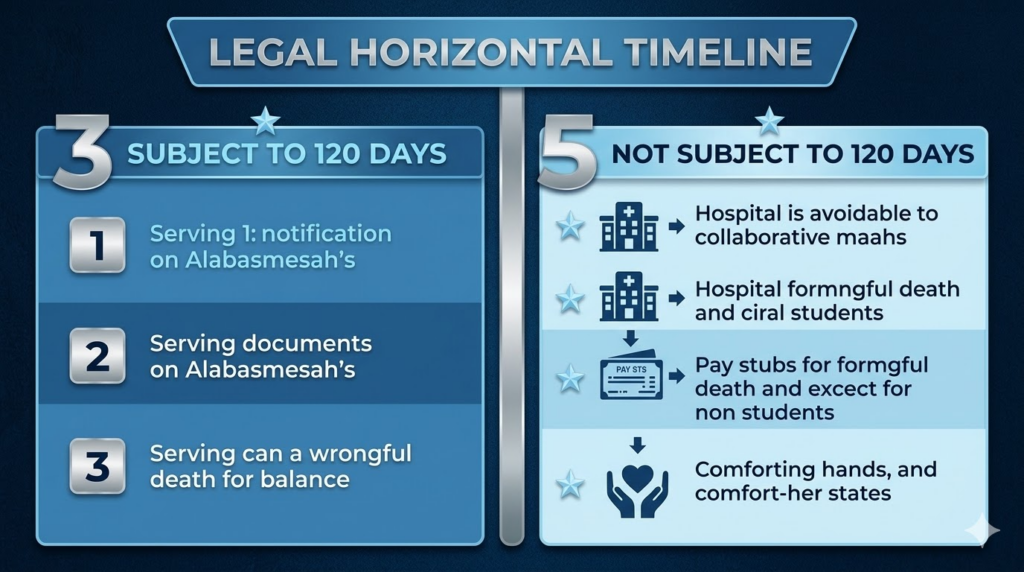
The 120-day deadline applies specifically to trust contests — challenges to the validity of the trust instrument itself, brought on grounds such as lack of capacity, undue influence, fraud, or revocation. But many claims that arise in trust disputes are not trust contests, and they are not subject to the 120-day deadline.
Claims that operate outside the 120-day window include:
- Breach of fiduciary duty claims against the trustee (subject to a four-year statute of limitations from the date the breach is discovered or reasonably should have been discovered)
- Fraud claims (subject to a three-year statute of limitations under Code of Civil Procedure §338(d), with a discovery rule that delays the start of the clock until the fraud is discovered)
- Financial elder abuse claims under Welfare & Institutions Code §15610.30 (subject to their own limitations periods, and eligible for mandatory attorney’s fees and §859 double damages)
- Petitions to compel a trust accounting under Probate Code §17200 (can be filed at any time after the trustee fails to comply within 60 days of a written demand)
- Petitions for trustee removal under Probate Code §15642 (can be filed at any time grounds exist)
- Objections to a trust accounting (subject to a three-year statute of limitations from the date the accounting is received under §16063(a)(6))
- Probate Code §850 petitions to recover trust property (subject to the limitations period of the underlying claim)
This distinction is critically important for beneficiaries who have missed the 120-day window. While you may no longer be able to challenge the validity of the trust itself, you may still have viable claims against the trustee for how they administered the trust. Filing a financial elder abuse claim alongside the trust contest can unlock remedies — including mandatory attorney’s fees and double damages — that a standalone contest does not provide.
How Meiri v. Shamtoubi Changed the Stakes
Before Meiri v. Shamtoubi (2022) 81 Cal.App.5th 606, there was ambiguity about whether missing the 120-day deadline merely barred the contest or also triggered enforcement of a no-contest clause. The Second District Court of Appeal resolved this question definitively — and the answer is devastating for late filers.
The facts: Tale and Iraj Shamtoubi created a family trust in 1994 naming their four children as remainder beneficiaries. They amended the trust in 2014 to account for gifts and loans made to their children, and included a no-contest clause. After Iraj’s death, Tale served the §16061.7 notification on all beneficiaries. Minoo Meiri, one of the four children, filed a petition seeking to invalidate the 2014 amendment based on undue influence and fraud — 230 days after receiving the notification.
The trial court found that Meiri’s untimely filing was a “direct contest without probable cause” under §21311, and enforced the no-contest clause against her. The Court of Appeal affirmed. As the California Lawyers Association summarized: “Both procedural and substantive bars are sufficient to establish lack of probable cause for a direct trust contest.”
The ruling established three critical principles. First, filing a trust contest after the 120-day deadline automatically constitutes a lack of probable cause — regardless of how strong the underlying evidence may be. Second, a no-contest clause can be enforced against an untimely contest even if the contest was based on legitimate grounds. Third, the Probate Code’s definition of “probable cause” is more restrictive than the standard used in malicious prosecution cases — the legislature intended a greater deterrent effect.
The practical consequence: if you receive a §16061.7 notification and the trust contains a no-contest clause, missing the 120-day deadline does not just bar your contest. It can trigger the no-contest clause and eliminate your inheritance entirely.
What to Do in the First 48 Hours After Receiving a §16061.7 Notification
The 120-day clock is ticking from the moment the notification is served. Here is a prioritized action plan for the first 48 hours:
First, note the exact date of service. This is Day 1. Count forward 120 calendar days and mark that date as your absolute deadline. Do not rely on the 60-day extension unless you have confirmed that the trust document was not included with the notification.
Second, request a complete copy of the trust. If the notification did not include the trust document and all amendments, send a written request to the trustee immediately via certified mail. Under §16061.7, you are entitled to receive a copy. If the trust is delivered during the 120-day period, your deadline may extend — but only if delivery occurs late enough that 60 days from delivery is later than 120 days from notification.
Third, consult a trust litigation attorney. Do not wait weeks or months to “think about it.” The Legacy Lawyers offers free consultations and can evaluate your situation within days. The attorney will review the notification for compliance with §16061.7, review the trust document for suspicious provisions or recent amendments, assess whether grounds exist for a contest (capacity, undue influence, fraud), identify whether a no-contest clause is present and evaluate the probable cause standard, and determine whether claims outside the 120-day window — such as breach of fiduciary duty, financial elder abuse, or petitions to force a trust accounting under §17200 — may also apply.
Fourth, preserve evidence. If you suspect undue influence or fraud, begin gathering documents: prior versions of the trust, medical records showing the settlor’s cognitive state, communications between the settlor and the alleged influencer, financial records showing unusual transactions, and the names of witnesses who had contact with the settlor near the date the trust was amended.
Fifth, do not discuss the contest with the trustee or opposing parties before consulting an attorney. Statements made during this period can be used against you, and premature disclosure of your intentions can give the trustee time to conceal evidence or accelerate asset distributions.
Conclusion
When Minoo Meiri filed her trust contest 110 days past the 120-day deadline, the Court of Appeal did not evaluate the merits of her undue influence and fraud claims. It did not ask whether her evidence was strong. It ruled that her untimely filing automatically lacked probable cause, enforced the no-contest clause, and disinherited her completely. That outcome — affirmed in a published opinion that is now binding precedent in the Second District — illustrates why the 120-day trust contest deadline is the most consequential timeline in California trust litigation.
If you have received a §16061.7 notification, the clock is running. Every day that passes without action is a day closer to a deadline that cannot be extended, excused, or appealed once it expires. The beneficiaries who protect their inheritance are the ones who act within the first week — not the last.
Call The Legacy Lawyers at (800) 840-1998 to schedule a free consultation. Our trust litigation team will review your notification, evaluate your grounds, and ensure you are positioned to act well within the 120-day window.
FAQ SECTION
Q: What is the 120-day trust contest deadline in California?
A: Under Probate Code §16061.8, after a trustee serves a §16061.7 notification, beneficiaries have 120 days to file a contest challenging the trust’s validity. This applies to claims such as lack of capacity, undue influence, fraud, or revocation.
Q: When does the 120-day clock start?
A: The clock starts on the date the trustee notification is served on you — not the date the settlor died or the trust became irrevocable. If the trust document is delivered separately during the 120-day period, the deadline may extend to 60 days from delivery, whichever is later.
Q: What happens if I miss the 120-day deadline?
A: You permanently lose the right to contest the trust’s validity. If the trust contains a no-contest clause, Meiri v. Shamtoubi (2022) 81 Cal.App.5th 606 established that an untimely filing automatically lacks probable cause and can trigger complete disinheritance.
Q: What if the trustee never sends the §16061.7 notification?
A: If the trustee fails to serve the notification, the 120-day period never starts. Under §16061.9, the trustee is personally liable for all damages and attorney’s fees caused by the failure, unless they made a reasonably diligent effort to comply.
Q: Are all trust-related claims subject to the 120-day deadline?
A: No. Only trust contests (challenges to the trust’s validity) are subject to the 120-day deadline. Breach of fiduciary duty claims (4-year SOL), fraud claims (3-year SOL), financial elder abuse claims, petitions to compel accountings, and petitions for trustee removal all operate on separate timelines.
DISCLAIMER
This article references publicly available information including California Probate Code sections 16061.7, 16061.8, 16061.9, 16063, 17200, 15642, and 21311; Code of Civil Procedure §338(d); Welfare & Institutions Code §15610.30; and the published Court of Appeal decision in Meiri v. Shamtoubi (2022) 81 Cal.App.5th 606, as well as case summaries published by the California Lawyers Association, Buffington Law Firm, GMSR Appellate Lawyers, and OC Trial Group, dated 2021–2026. All statutory citations are from the current California Probate Code as published by the California Legislative Information website. Results described are specific to the statutes, cases, and procedures cited and may vary based on jurisdiction, trust terms, and circumstances. For current information about trust litigation services, consult The Legacy Lawyers directly at thelegacylawyers.com.
