

Your mother can no longer manage her finances. Bills are piling up. You’ve noticed suspicious withdrawals from her accounts. Someone needs legal authority to step in and protect her—but you’ve heard conservatorship is expensive, and you’re not sure what to expect.
Conservatorship costs in California typically range from $3,000 to $10,000 or more in initial filing and attorney fees, with ongoing annual expenses for conservator compensation, accountings, and court reviews. Under California Probate Code §§1830–1851, the court oversees these costs to ensure they’re reasonable and serve the conservatee’s best interests. If you’re considering conservatorship for a loved one, understanding these expenses upfront helps you plan financially and avoid surprises. The Legacy Lawyers help California families navigate conservatorship establishment and disputes, protecting both the conservatee and the family’s resources.
Understanding Conservatorship Costs in California
A conservatorship is a court-supervised arrangement where one person (the conservator) gains legal authority to make decisions for another person (the conservatee) who can no longer care for themselves. California law establishes two types: conservatorship of the person (healthcare and living decisions) and conservatorship of the estate (financial decisions). Many families pursue both simultaneously.
The costs arise at multiple stages. First, there are court filing fees. According to the California Judicial Council’s fee schedule, filing a petition for conservatorship costs approximately $465–$500 in most counties, though exact amounts vary by jurisdiction. Additional fees apply for filing accountings, requesting orders, and other motions throughout the case.
Second, attorney fees represent the largest expense for most families. California doesn’t set fixed rates for conservatorship attorneys. Hourly rates typically range from $250 to $600 depending on the attorney’s experience and geographic location. An uncontested conservatorship—where no one objects—might cost $3,000 to $6,000 in attorney fees. A contested conservatorship, where family members dispute who should serve as conservator or whether conservatorship is necessary at all, can exceed $20,000 or more.
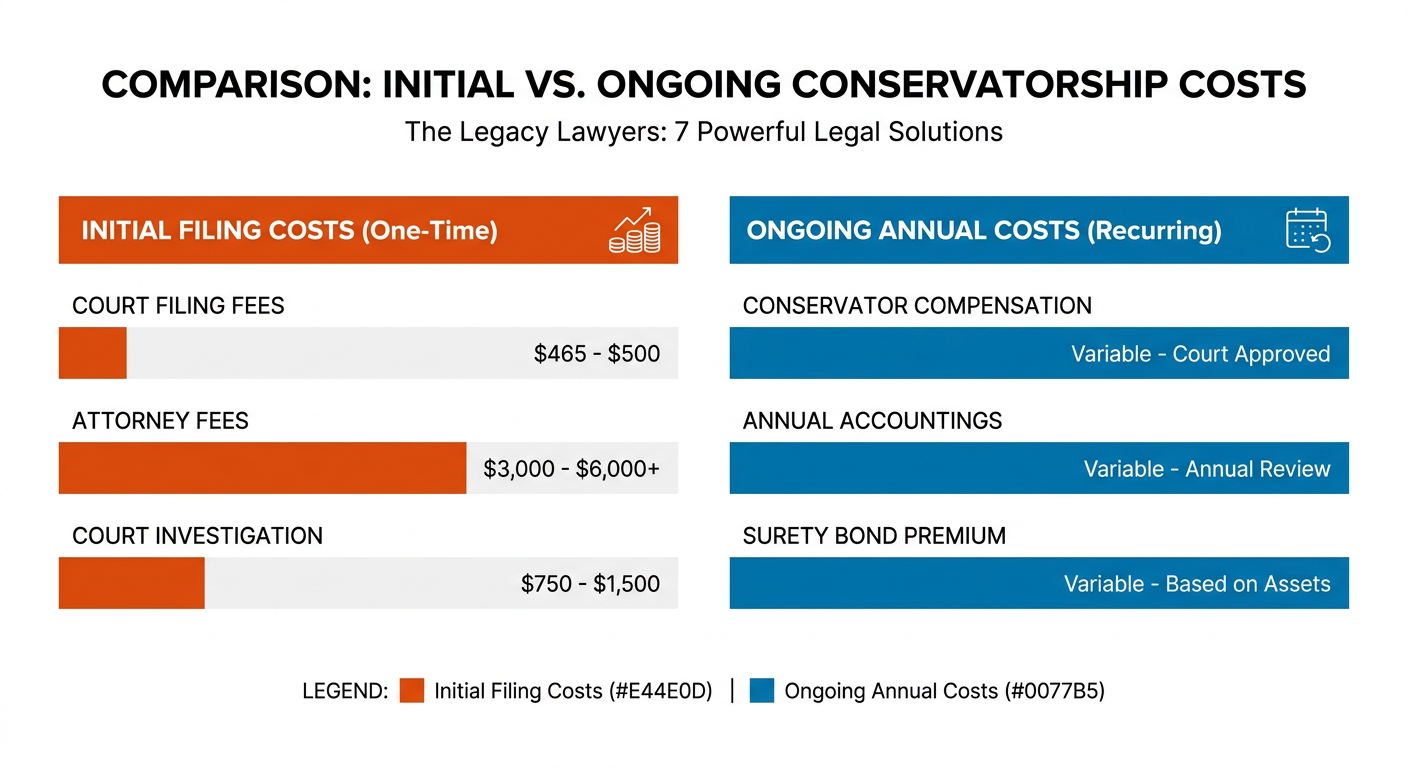
Third, the court often appoints a court investigator to evaluate the proposed conservatee’s situation and make recommendations. Under California Probate Code §1826, the investigator interviews the proposed conservatee, reviews medical evidence, and files a report with the court. This investigation fee—typically $750 to $1,500—is paid from the conservatee’s estate if funds are available.
For individuals with limited resources, California offers fee waivers. If the proposed conservatee receives public benefits like Medi-Cal or SSI, or if family income falls below certain thresholds, the court may waive filing fees entirely.
Your Rights and Options Regarding Conservatorship Expenses
California law provides several protections to ensure conservatorship costs remain reasonable and serve the conservatee’s interests—not drain their estate.
Court approval for major expenses. Under California Probate Code §2401, conservators must obtain court approval before paying themselves or their attorneys from the conservatee’s estate. The court reviews whether fees are reasonable given the services provided. If you’re a family member concerned about excessive fees, you have the right to object to any proposed compensation and request the court reduce it.
Conservator compensation limits. Professional conservators (non-family members who serve as conservators) typically charge between $75 and $175 per hour. Family member conservators can also receive compensation, though many waive it. California Probate Code §2942 requires that compensation be “just and reasonable” based on the circumstances of the estate and the services performed.
Required accountings. Under California Probate Code §2620, conservators of the estate must file detailed accountings with the court—typically annually—showing all income received, expenses paid, and assets under management. These accountings cost money to prepare (often $1,000–$3,000 in attorney or accountant fees), but they provide crucial oversight. As an interested party, you can review these accountings and challenge any suspicious expenses.
Bonding requirements. The court typically requires conservators to post a surety bond equal to the value of the conservatee’s liquid assets plus one year’s estimated income. Bond premiums usually run 0.5% to 1% of the bond amount annually. For a $200,000 bond, expect to pay $1,000 to $2,000 per year. The bond protects the conservatee’s estate if the conservator mismanages funds.
If you suspect a conservator is charging excessive fees, mismanaging assets, or failing to act in the conservatee’s best interests, you have the right to file a petition with the probate court requesting an investigation or removal of the conservator. Contesting a conservatorship requires specific legal grounds, but the court takes allegations of financial abuse seriously.
Navigating conservatorship costs—or challenging a conservator’s fees—requires understanding California probate law and court procedures. If you’re concerned about expenses in a pending or existing conservatorship, The Legacy Lawyers can help. We serve clients throughout California from seven office locations, including Los Angeles, San Diego, and Orange County.
How The Legacy Lawyers Help with Conservatorship Matters
Conservatorship cases involve complex legal procedures, significant financial stakes, and often painful family dynamics. The Legacy Lawyers approach these matters with both legal precision and genuine empathy for what families are experiencing.
Our team of California attorneys—including attorneys recognized by Super Lawyers and Martindale Hubbell—handles conservatorship matters across the state. We help families establish conservatorships when a loved one needs protection, and we represent individuals challenging conservators who have overstepped their authority or charged unreasonable fees.
Understanding the differences between conservatorship and guardianship is crucial when protecting a vulnerable adult or child. We guide clients through these distinctions and help identify the most appropriate—and cost-effective—legal structure for their situation.
When conservator misconduct is suspected, we investigate thoroughly. Financial exploitation of conservatees is a form of elder abuse under California law, and we pursue all available remedies to protect our clients’ interests and recover misappropriated assets.
From our offices in Irvine, San Francisco, Sacramento, Inland Empire, and Torrance, we serve clients facing conservatorship challenges throughout California.
How Much Does a Conservator Get Paid in California?
Conservator compensation in California depends on whether the conservator is a family member or a licensed professional fiduciary. Under California Probate Code §2942, the court determines what constitutes “just and reasonable” compensation based on the estate’s size, complexity, and the services the conservator provides.
Professional fiduciaries licensed by the California Department of Consumer Affairs typically charge $75 to $175 per hour. Annual fees for ongoing management often range from $5,000 to $15,000 or more for complex estates. Family members serving as conservators may receive similar compensation but often waive fees entirely, especially for smaller estates.
Can Conservatorship Fees Be Paid from the Conservatee’s Estate?
Yes—most conservatorship expenses, including attorney fees, conservator compensation, and court costs, are paid from the conservatee’s estate rather than out-of-pocket by family members. California Probate Code §2623 authorizes payment of “reasonable expenses” incurred in administering the conservatorship.
However, all payments require court approval. The conservator must file a petition requesting fee approval, and interested parties (including family members) can object if they believe the fees are excessive. Courts scrutinize fee requests carefully, particularly in contested cases where emotions run high and costs can escalate.
What Happens If the Conservatee Has No Money to Pay for Conservatorship?
When a proposed conservatee has limited or no assets, California provides several options. First, fee waivers are available for court filing fees if the conservatee or petitioner meets income guidelines or receives means-tested public benefits. The California Courts self-help center provides fee waiver forms and instructions.
Second, the Public Guardian—a county agency—may serve as conservator for individuals who have no willing or able family members and lack resources to pay a private fiduciary. Public Guardian services are typically funded through county budgets, though the conservatee’s estate (including Social Security income) may contribute to costs.
Third, some attorneys accept conservatorship cases on a reduced-fee or pro bono basis, particularly through local bar association referral programs. Legal aid organizations may also assist with conservatorship petitions for qualifying individuals.
Conclusion
Conservatorship costs in California vary significantly based on whether the case is contested, the complexity of the conservatee’s estate, and ongoing management requirements. Understanding these expenses—from court filing fees to conservator compensation—helps families plan financially and identify potential red flags if costs seem unreasonable.
California law provides protections through court oversight, required accountings, and your right to challenge excessive fees. If you’re facing a conservatorship matter—whether establishing one to protect a loved one or questioning a conservator’s conduct—you don’t have to navigate it alone.
Get started with The Legacy Lawyers. We serve clients statewide from offices in Irvine, Los Angeles, Torrance, Inland Empire, San Diego, San Francisco, and Sacramento.
Frequently Asked Questions
How much does it cost to get a conservatorship in California?
Initial conservatorship costs typically range from $3,000 to $10,000 for uncontested cases, including court filing fees (approximately $465–$500) and attorney fees. Contested conservatorships—where family members dispute the arrangement—can exceed $20,000 or more. Under California Probate Code §2623, these costs are generally paid from the conservatee’s estate with court approval.
Can family members serve as conservators without getting paid?
Yes, family members serving as conservators can waive compensation entirely. However, California Probate Code §2942 permits conservators to receive “just and reasonable” compensation for their services if they choose to request it. The court must approve any compensation, whether the conservator is a family member or professional fiduciary.
How long does a conservatorship last in California?
A conservatorship continues until the conservatee dies, regains capacity, or the court terminates it for other reasons. Under California Probate Code §1863, conservatorships are reviewed periodically—typically every one to two years—by a court investigator who evaluates whether the conservatorship remains necessary.
What if I can’t afford an attorney for a conservatorship case?
California offers fee waivers for court filing costs if you meet income guidelines or receive public benefits like Medi-Cal or SSI. Some attorneys offer reduced-fee arrangements, and legal aid organizations may assist with conservatorship petitions. The Public Guardian may serve as conservator when no family member is available and resources are limited.
When should I hire an attorney for a conservatorship dispute?
Consider hiring an attorney if you’re contesting who should serve as conservator, challenging a conservator’s fees or conduct, or facing opposition to your conservatorship petition. The Legacy Lawyers handle conservatorship litigation throughout California, protecting both conservatees and family members’ rights in disputed cases.
