

Your mother passed away six months ago. The trust she created was supposed to provide for you and your siblings equally. But something doesn’t add up. The trustee says the estate is worth far less than you expected, and when you ask questions, you get vague answers or silence. You remember her talking about investment accounts, real property, jewelry—assets that seem to have vanished.
Under California Probate Code §16060 and §16061, trust beneficiaries have the legal right to demand information about trust assets, request formal accountings, and petition the court to compel disclosure when trustees fail to provide transparency. California law specifically protects your right to investigate when assets appear to be missing, hidden, or misappropriated from an estate or trust.
This article explains exactly how California beneficiaries can investigate missing estate assets, what legal tools are available to force disclosure, and how to recover property that has been concealed or improperly transferred. The Legacy Lawyers specialize in helping beneficiaries recover missing assets throughout California.
Understanding Missing Estate Assets Under California Law
Missing estate assets take many forms. Sometimes a trustee simply fails to disclose certain accounts. Other times, assets are actively hidden, transferred to third parties, or depleted through self-dealing. In contested family situations—second marriages, estranged siblings, blended families—the risk of asset concealment increases dramatically.
California Probate Code §16060 establishes the foundational duty of trustees to keep beneficiaries “reasonably informed of the trust and its administration.” This isn’t optional. It’s a fiduciary obligation enforceable by law. When a trustee goes silent or provides incomplete information, they may be violating this statutory duty.
The California Supreme Court addressed trustee disclosure obligations in Moeller v. Superior Court (1997) 16 Cal.4th 1124, holding that beneficiaries possess discovery rights that allow them to investigate potential breaches of trust. This case established that beneficiaries are not required to simply accept a trustee’s representations—they can demand proof.
Common scenarios involving missing assets include:
- Bank accounts or brokerage accounts that existed during the decedent’s lifetime but aren’t disclosed in trust inventories
- Real property transferred shortly before death under suspicious circumstances
- Personal property—jewelry, art, collectibles, vehicles—that disappears after death
- Life insurance policies naming beneficiaries other than the trust
- Business interests or partnership shares not accounted for
- Cash withdrawals or wire transfers made when the decedent lacked capacity

In Estate of Giraldin (2012) 55 Cal.4th 1058, the California Supreme Court affirmed that trustees who conceal assets or breach their fiduciary duties may be personally liable for the value of the missing property plus damages. This means beneficiaries have powerful remedies when assets go missing.
Your Legal Rights to Investigate Missing Assets
California law provides beneficiaries with specific legal tools to investigate and recover missing estate assets. Understanding these rights is the first step toward protecting your inheritance.
The Right to Information and Accountings
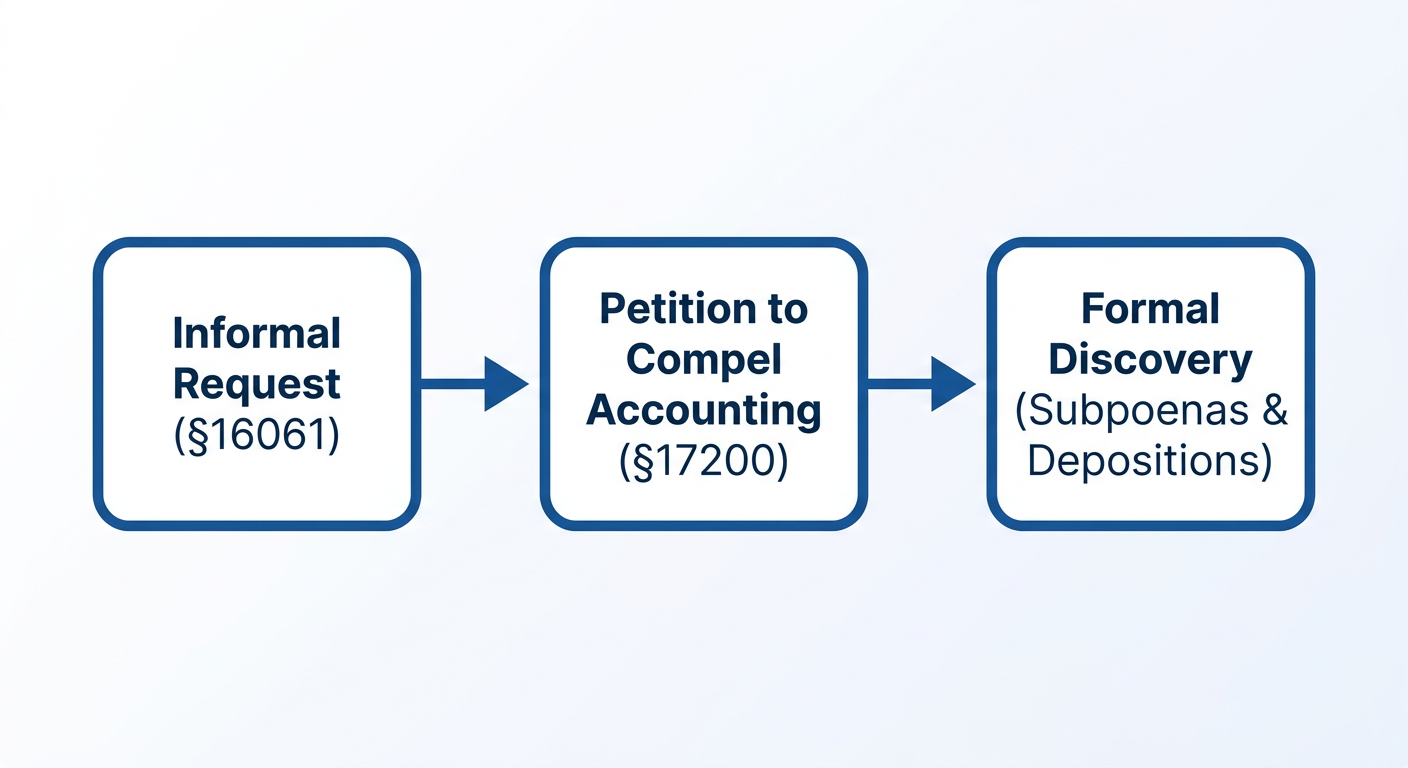
California Probate Code §16061 requires trustees to provide beneficiaries with a copy of the trust instrument and relevant trust information upon request. Section 16062 goes further, requiring trustees to provide an accounting of trust assets, liabilities, receipts, and disbursements at least annually and upon termination of the trust.
If a trustee refuses to provide this information voluntarily, Probate Code §17200 allows beneficiaries to petition the court to compel an accounting. This is a powerful tool. The court can order the trustee to produce detailed financial records going back years, revealing exactly what happened to trust assets.
Court-Ordered Discovery
When informal requests fail, California beneficiaries can initiate formal trust litigation and utilize discovery procedures. This includes:
- Subpoenas to banks, financial institutions, and title companies for account records
- Depositions of the trustee, family members, and anyone with knowledge of the decedent’s assets
- Interrogatories requiring written answers under oath about asset locations and transfers
- Requests for production of financial statements, tax returns, and property records
Probate Code §8800 specifically addresses asset recovery in probate, allowing the personal representative or interested parties to petition for an order compelling any person to appear and account for property believed to belong to the estate.
Fraudulent Transfer Actions
When assets have been improperly transferred—for example, when a caregiver convinces an elderly person to sign over real property before death—California’s Uniform Voidable Transactions Act (Civil Code §3439) allows beneficiaries to pursue recovery. Transfers made without fair consideration, particularly when the transferor lacked capacity, can be set aside by the court.
If you suspect assets are missing from an estate or trust, The Legacy Lawyers can help you investigate and recover what you’re owed. Get started with a consultation—we serve clients throughout California from offices in Irvine, Los Angeles, Torrance, Inland Empire, San Diego, San Francisco, and Sacramento.
How The Legacy Lawyers Help Recover Missing Assets
Investigating missing estate assets requires both legal expertise and strategic persistence. The Legacy Lawyers bring decades of combined experience in beneficiary rights and trust litigation to these complex cases.
Our approach typically begins with a comprehensive review of available trust documents, financial records, and family circumstances. We identify gaps—accounts that should exist but aren’t disclosed, property transfers that don’t make sense, distributions that don’t match the trust terms. From there, we build a strategic plan to compel disclosure and pursue recovery.
Attorney Phillip C. Lemmons, recognized by Super Lawyers, leads a team that has successfully recovered substantial assets for beneficiaries across California. We understand that these cases involve more than money—they involve family betrayal, grief, and the need for justice.
The firm maintains offices in Irvine, Los Angeles, Torrance, Inland Empire, San Diego, San Francisco, and Sacramento, allowing us to represent beneficiaries statewide while providing personalized attention.
Awards from Expertise, Avvo, Martindale Hubbell, and the Orange County Bar Association reflect our commitment to excellence in trust and estate litigation. But what matters most is the result: recovering the assets our clients are legally entitled to receive.
What Evidence Can Prove Assets Are Missing?
The strength of a missing assets case depends on the evidence you can gather. California courts require proof that assets existed, that they should be part of the estate or trust, and that they are not being accounted for properly.
Helpful evidence includes prior tax returns showing income from undisclosed accounts, bank statements from before the decedent’s death, property records showing ownership, insurance policies listing asset values, and communications referencing specific property. Even informal evidence—photos of jewelry, conversations about investments, letters mentioning property—can help establish that assets have disappeared.

Under California Evidence Code §500, the burden generally rests on the party asserting a claim to prove it. However, Probate Code §16061.5 shifts some burden to trustees by requiring them to notify beneficiaries of their right to receive information. A trustee’s failure to comply with statutory disclosure requirements can itself be evidence of wrongdoing.
How Long Do I Have to File a Missing Assets Claim?
Timing matters in missing assets cases. California Code of Civil Procedure §338(d) generally provides a three-year statute of limitations for fraud claims, running from the date the fraud was discovered or should have been discovered with reasonable diligence. For breach of trust claims, Probate Code §16460 establishes a three-year limitation period that begins when the beneficiary has actual knowledge of the breach.
However, certain actions can toll these deadlines. If a trustee actively conceals assets, the discovery rule may extend the time to file. Additionally, actions to recover trust property can sometimes be brought at any time during the administration of the trust under Probate Code §17200.
The critical point: don’t wait. Evidence disappears, witnesses’ memories fade, and assets may be further dissipated. If you suspect missing assets, request a formal accounting immediately and consult with an attorney about your options.
Can a Trustee Be Held Personally Liable for Missing Assets?
Yes. Under California Probate Code §16440, a trustee who commits a breach of trust is personally liable for the damages caused. This includes liability for any loss in value of trust property, any profit the trustee made through the breach, and any profit that would have accrued to the trust absent the breach.
In Uzyel v. Kadisha (2010) 188 Cal.App.4th 866, the California Court of Appeal affirmed that trustees can be surcharged for losses resulting from their failure to properly manage or account for trust assets. The court emphasized that the fiduciary duty of a trustee is among the highest obligations recognized in law.
Additionally, if a trustee’s conduct rises to the level of fraud or elder abuse, they may face liability under Welfare and Institutions Code §15657, which allows for attorney’s fees and enhanced damages in cases involving financial elder abuse.
What If the Missing Assets Were Transferred Before Death?
Assets transferred before death present additional complexities. California law distinguishes between valid inter vivos gifts and improper transfers made through undue influence, lack of capacity, or fraud.
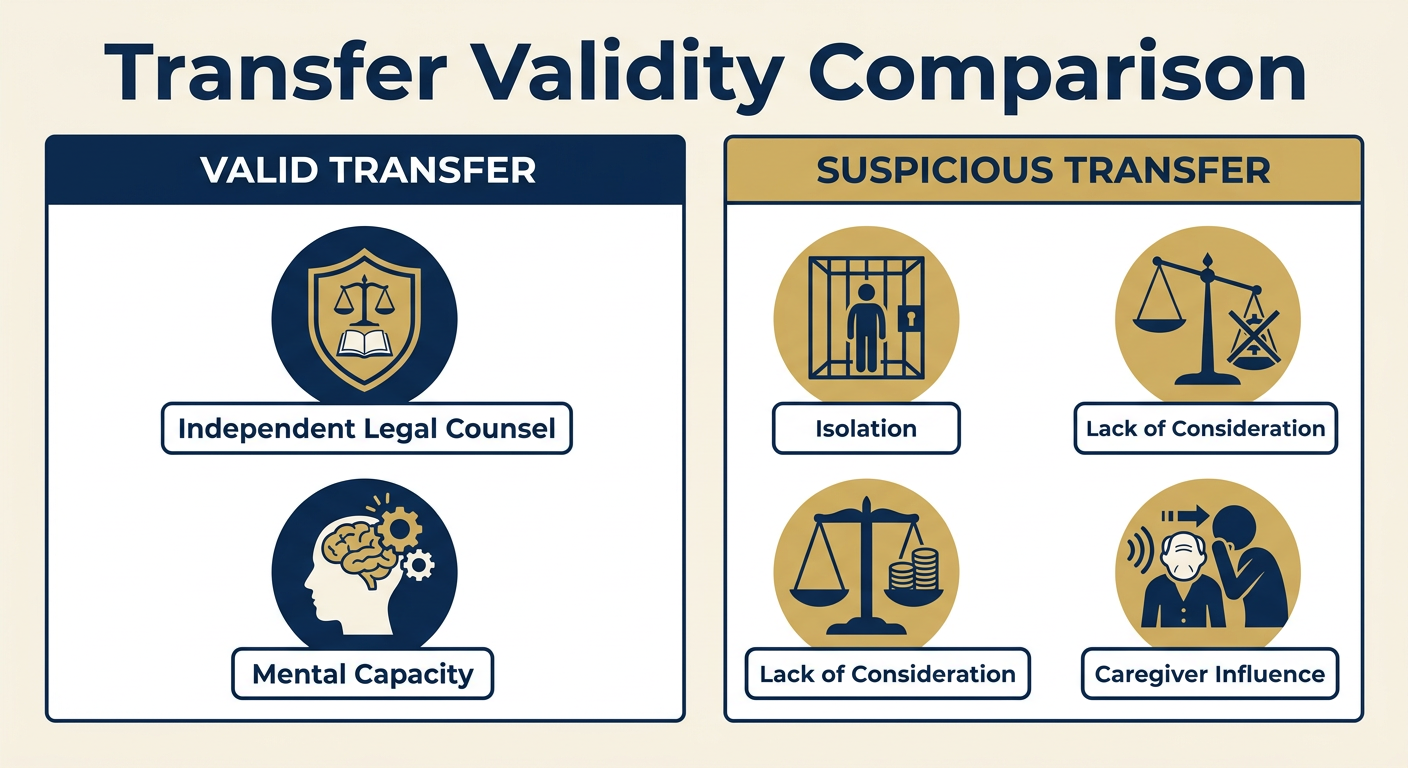
Under California Probate Code §21380, certain transfers to caregivers, fiduciaries, or their family members are presumptively invalid unless specific requirements are met. This “certificate of independent review” requirement protects vulnerable adults from exploitation.
In Bernard v. Foley (2006) 39 Cal.4th 794, the California Supreme Court addressed situations where caretakers obtain substantial gifts from elderly individuals, establishing standards for proving undue influence. If your loved one transferred assets under suspicious circumstances—particularly if they were isolated, dependent on the transferee, or showed signs of diminished capacity—those transfers may be recoverable.
The Legacy Lawyers have experience recovering assets transferred through elder abuse, working with forensic accountants and other experts to trace property and build compelling cases for recovery.
Conclusion
When estate assets go missing in California, beneficiaries have powerful legal tools to investigate and recover what is rightfully theirs. California Probate Code provides specific rights to information, accountings, and court intervention when trustees fail to act transparently. The key is acting promptly, gathering evidence, and working with attorneys who understand the complexities of trust and estate litigation.
Get started with The Legacy Lawyers. We serve clients statewide from offices in Irvine, Los Angeles, Torrance, Inland Empire, San Diego, San Francisco, and Sacramento.
Frequently Asked Questions
How can I find out what assets were in my parent’s estate?
Under California Probate Code §16061, you have the right to receive a copy of the trust document and relevant information about trust administration. You can also request a formal accounting under §16062, which must detail all assets, transactions, and distributions. If the trustee refuses, you can petition the court to compel disclosure.
What should I do if I suspect a trustee is hiding assets?
Document your concerns in writing and formally request an accounting under California Probate Code §16062. Gather any evidence you have of assets that should exist—prior tax returns, old bank statements, property records. Then consult with a California trust litigation attorney who can subpoena records and conduct formal discovery if necessary.
Can I sue someone who took assets from my parent before they died?
Yes. California’s Uniform Voidable Transactions Act (Civil Code §3439) and Probate Code §21380 provide remedies for improper pre-death transfers. If the transfer involved fraud, undue influence, or lack of capacity, the court can set it aside. Elder abuse claims under Welfare and Institutions Code §15657 may also apply, potentially allowing recovery of attorney’s fees.
How long does a missing assets investigation typically take?
Timeframes vary depending on the complexity of the estate, the number of financial institutions involved, and whether litigation becomes necessary. Simple cases with cooperative trustees may resolve in a few months. Contested matters involving hidden accounts, fraudulent transfers, or uncooperative parties can take one to two years or longer through the court system.
When should I hire an attorney for a missing assets case?
Consult an attorney as soon as you have reason to believe assets are missing or a trustee is not being transparent. Early legal involvement allows you to preserve evidence, meet statutory deadlines, and send a clear message that you intend to enforce your rights. The Legacy Lawyers offer consultations to evaluate your situation and explain your options under California law.
This article references publicly available information including California Probate Code, California case law, and published legal guidance. The information provided is specific to California law and is for educational purposes only—it does not constitute legal advice or create an attorney-client relationship. Laws change and every case is unique. For guidance on your specific situation, consult a licensed California attorney. Contact The Legacy Lawyers at thelegacylawyers.com/get-started for a consultation.
