

You agreed to serve as trustee because someone trusted you. You followed the trust document, made decisions you believed were right, and then—out of nowhere—a beneficiary accuses you of breach of fiduciary duty. Suddenly you’re facing formal allegations, potential personal liability, and the prospect of defending yourself in California probate court.
Under California Probate Code §16400, a trustee who commits a breach of trust is personally liable for the damage caused to the trust estate, any profit made through the breach, and any profit that would have accrued to the trust absent the breach. However, being accused of a breach is not the same as being liable for one. Trustees facing allegations have legal defenses available, and understanding what you’re up against is the first step toward protecting yourself.
At The Legacy Lawyers, we represent trustees throughout California who are defending against breach allegations. This article explains the most common claims trustees face, what California law actually requires, and when it’s time to seek legal defense.
Understanding Trustee Breach Allegations Under California Law
A breach of trust occurs when a trustee violates any duty owed to the beneficiaries or the trust itself. California Probate Code §16400 establishes that trustees are liable for breaches—but the code also recognizes that trustees have broad discretionary powers when acting in good faith and in accordance with the trust terms.
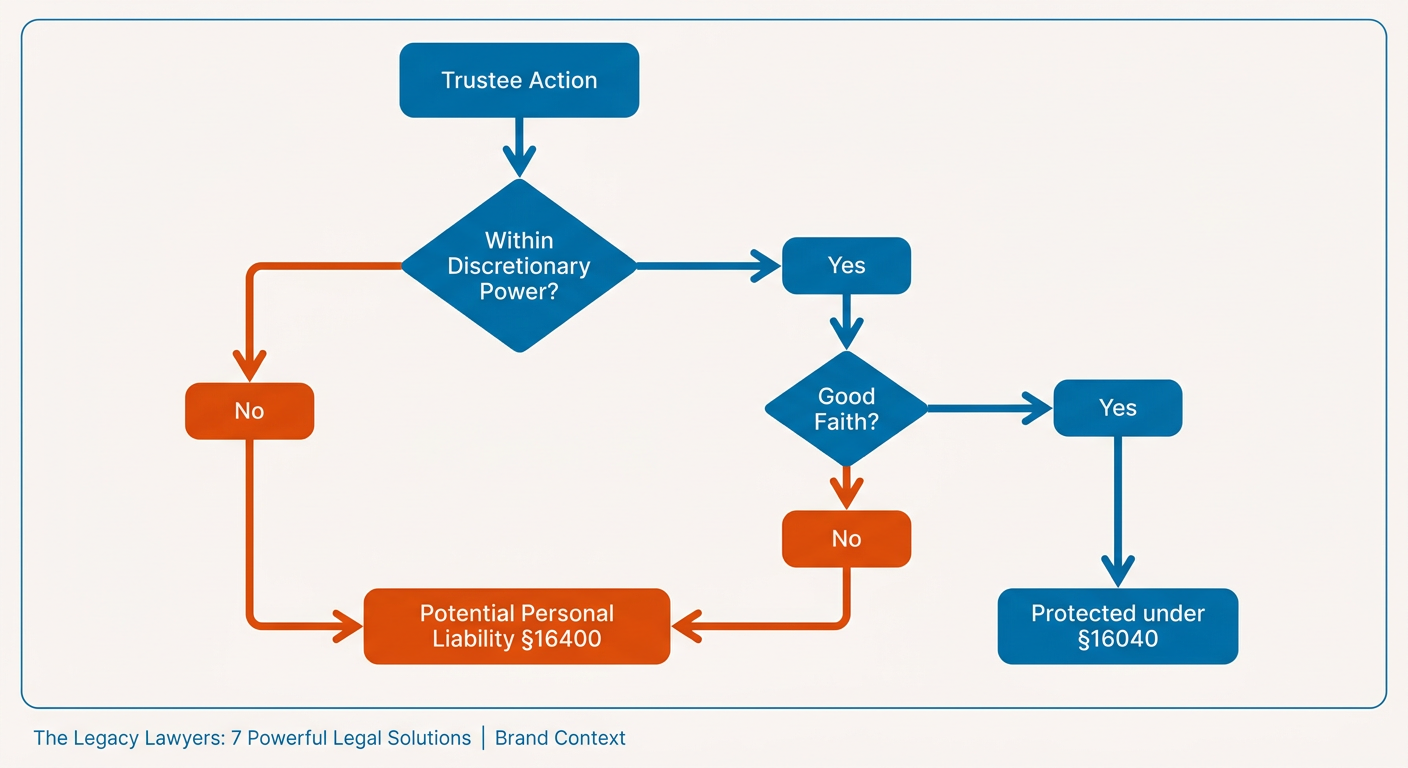
The most common breach allegations fall into several categories:
Failure to Provide Information and Accountings
Under California Probate Code §16061.7, trustees must notify beneficiaries when a trust becomes irrevocable, typically within 60 days of the settlor’s death. Under California Probate Code §16062, beneficiaries can demand a formal accounting—and trustees must comply. Allegations of breach often arise when trustees delay or refuse to provide this information, even when the delay is caused by legitimate administrative complexity.
Self-Dealing and Conflicts of Interest
California Probate Code §16004 prohibits trustees from using trust property for their own benefit or engaging in transactions where their personal interests conflict with their duties to the trust. Allegations of self-dealing are among the most serious—and most frequently raised. A trustee who purchases property from the trust, borrows trust funds, or receives compensation beyond what the trust document authorizes may face claims under this section.
Failure to Invest Prudently
The Uniform Prudent Investor Act, codified in California Probate Code §16045-16054, requires trustees to invest trust assets with reasonable care, skill, and caution. Beneficiaries frequently allege breach when investments lose value—even when the trustee followed a sound investment strategy. The law evaluates conduct at the time the decision was made, not with hindsight, but allegations are common whenever returns disappoint.
Failure to Distribute Assets Timely
Trustees have a duty to distribute trust assets according to the trust terms. When distributions are delayed—whether due to pending tax issues, disputes among beneficiaries, or legitimate administrative reasons—beneficiaries may allege the trustee is wrongfully withholding their inheritance.
In Estate of Giraldin (2012) 55 Cal.4th 1058, the California Supreme Court addressed trustee liability for delayed distributions, emphasizing that trustees must balance their duty to distribute with their duty to preserve assets and pay legitimate expenses. What beneficiaries perceive as delay may actually be prudent administration.
Your Rights and Options as an Accused Trustee
Being accused of breach doesn’t mean you’re guilty of anything. California law provides trustees with meaningful protections and defenses.
The Trust Document Is Your First Defense
Trust instruments often contain provisions that expand trustee discretion, limit liability, or specify the standard of care required. Under California Probate Code §16461, exculpatory clauses that relieve a trustee from liability for breach are enforceable—except for breaches committed in bad faith, with reckless indifference, or for acts that were intentionally harmful. Review your trust document carefully; it may provide defenses the beneficiary hasn’t considered.
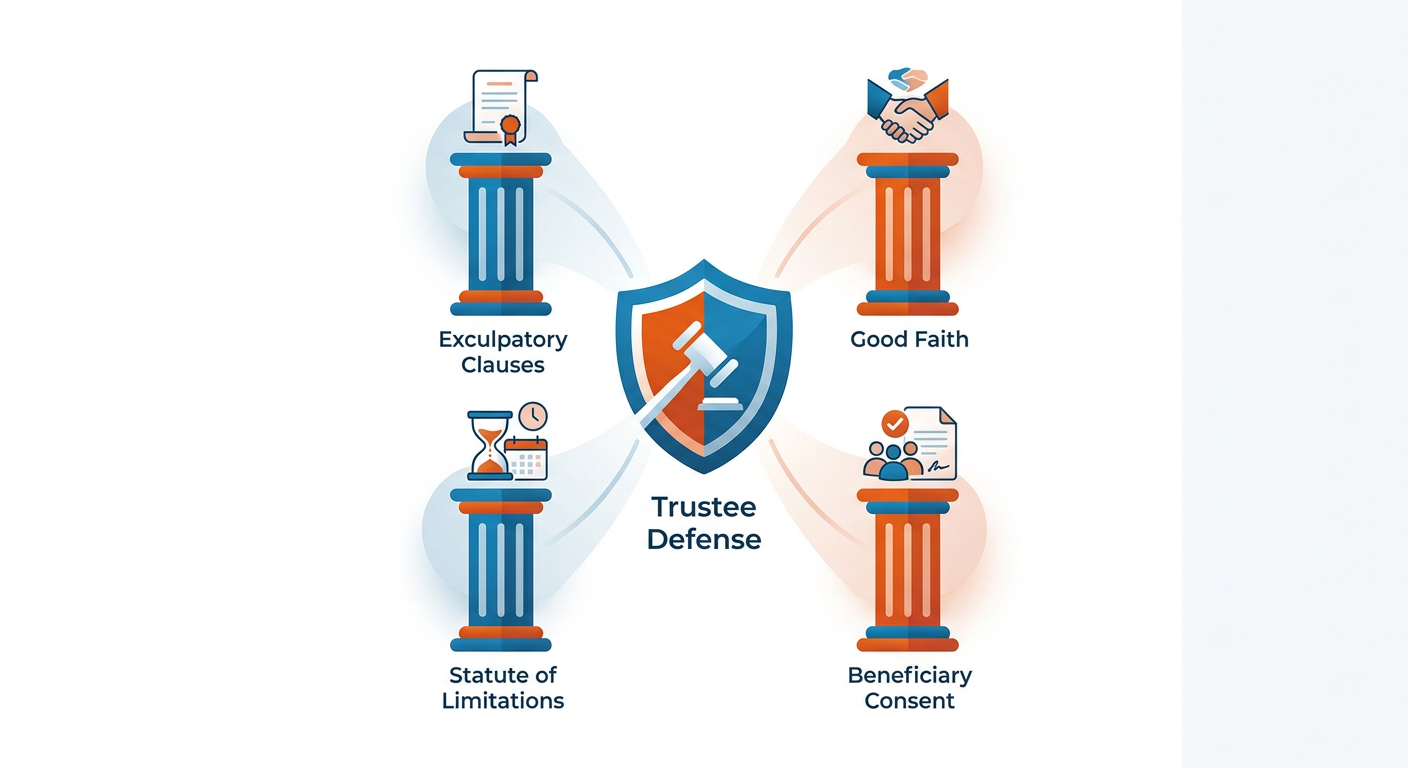
Statutory defenses available to trustees facing breach allegations.
Good Faith and Reasonable Judgment
Trustees who act in good faith and exercise reasonable judgment are protected even when outcomes are unfavorable. California Probate Code §16040 establishes that a trustee is not liable for acting on a reasonable interpretation of the trust terms. If you can demonstrate that your decisions were thoughtful, documented, and aligned with the trust’s purposes, you have a defense.
Statute of Limitations
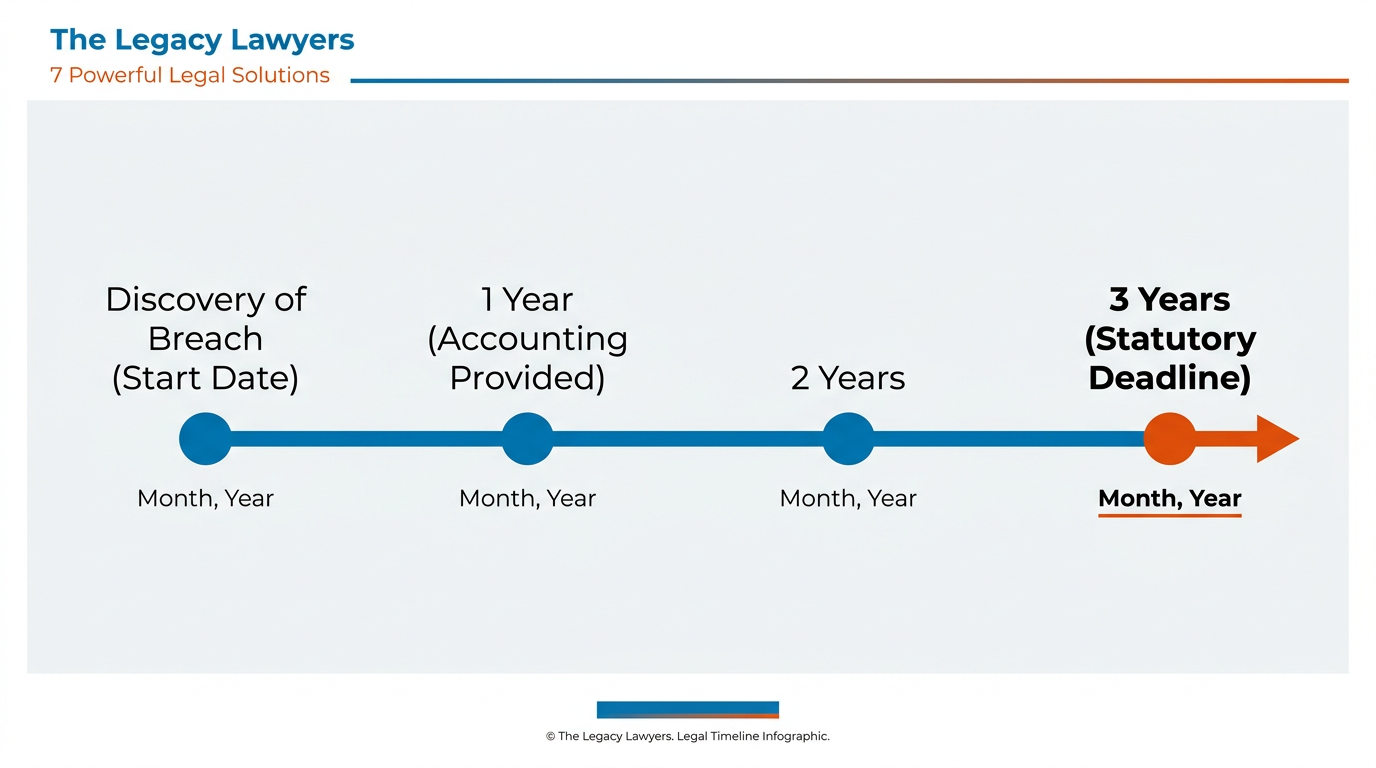
Beneficiaries cannot wait indefinitely to bring claims. Under California Probate Code §16460, the statute of limitations for breach of trust is generally three years from the date the beneficiary discovered or should have discovered the breach. If allegations relate to conduct from years ago and the beneficiary received accountings or other notice, a limitations defense may apply.
Consent and Ratification
If beneficiaries consented to the conduct now being challenged—or ratified it after the fact by accepting distributions or approving accountings—they may be barred from claiming breach. California Probate Code §16463 provides that a beneficiary cannot hold a trustee liable for conduct the beneficiary consented to, unless consent was induced by improper conduct.
If you’re facing breach allegations as a trustee in California, you don’t have to navigate this alone. The Legacy Lawyers provide trustee defense services throughout California. Get started with a consultation—we serve clients from seven offices statewide.
How The Legacy Lawyers Defend Trustees
At The Legacy Lawyers, we understand that serving as trustee is often a thankless role. You step in during a family’s most difficult time, manage complex assets and competing interests, and try to honor the wishes of someone who trusted you. When beneficiaries turn hostile, it can feel like a betrayal.
Our team of California trust litigation attorneys approaches trustee defense with the same rigor we bring to beneficiary representation. We analyze the trust document, review your conduct and documentation, identify applicable defenses under California Probate Code, and develop a strategy to protect your interests.
Attorneys Phillip C. Lemmons (Super Lawyers designation) and Nikolas S. Antzoulatos lead a team recognized by Martindale Hubbell, Avvo, and Expertise for their work in trust litigation. We serve trustees from Irvine, Los Angeles, Torrance, the Inland Empire, San Diego, San Francisco, and Sacramento.
We recognize that these cases involve more than legal arguments. They involve family relationships, reputations, and often substantial financial exposure. Our approach balances aggressive defense with practical resolution—because sometimes the best outcome is ending the dispute, not prolonging it.
Can a Trustee Be Personally Liable for Breach in California?
Yes. Under California Probate Code §16400, a trustee who breaches their fiduciary duty is personally liable for damages to the trust, any profit the trustee made from the breach, and any profit that would have accrued to the trust but for the breach. However, liability requires proof of an actual breach—not merely an allegation. Trustees who acted in good faith, within the scope of the trust terms, and in compliance with the fiduciary duties California law requires have strong defenses against liability claims.
What Should I Do If a Beneficiary Demands an Accounting?
Comply—but do so carefully. Under California Probate Code §16062, beneficiaries have a statutory right to demand accountings, and failure to provide one can itself become grounds for removal or liability claims. However, the accounting must be accurate and complete. Before responding, consult with an attorney to ensure the accounting presents trust activity clearly and doesn’t inadvertently create ammunition for meritless claims. Learn more about trust accounting disputes and your obligations.
When Should a Trustee Hire a Defense Attorney?
The moment you receive formal notice of a claim, a petition for removal, or a demand letter from a beneficiary’s attorney, you should consult counsel. Even informal threats can escalate quickly. Early legal involvement allows you to preserve evidence, avoid missteps in communications with beneficiaries, and understand your exposure before making decisions that could affect the outcome. Trustees who wait until litigation is filed often find their options limited. The Legacy Lawyers offer consultations for trustees facing allegations throughout California.
Conclusion
Facing breach allegations as a trustee is stressful, but it’s not the same as being found liable. California Probate Code provides trustees with real protections—exculpatory clauses, good faith defenses, consent doctrines, and statutes of limitations. The key is understanding your rights, documenting your conduct, and responding strategically to allegations.
Get started with The Legacy Lawyers. We serve trustees statewide from offices in Irvine, Los Angeles, Torrance, Inland Empire, San Diego, San Francisco, and Sacramento.
Frequently Asked Questions
What is considered a breach of trust under California law?
A breach of trust occurs when a trustee violates any duty owed to the trust or its beneficiaries under the trust terms or California Probate Code. Common breaches include failure to account, self-dealing, imprudent investment, and delay in distributions. However, the conduct must actually violate a legal duty—disagreement with trustee decisions is not automatically a breach.
Can trustees recover legal fees when defending against breach claims?
Under California Probate Code §15684, trustees are generally entitled to reasonable compensation from the trust, including reimbursement for legal expenses incurred in administering the trust. However, if a court finds the trustee committed a breach, the trustee may be required to personally bear defense costs. Successful defense often supports reimbursement from trust assets.
How long do beneficiaries have to sue a trustee for breach?
Under California Probate Code §16460, the statute of limitations is three years from when the beneficiary discovered or reasonably should have discovered the breach. Providing regular accountings can help establish when the limitations period began—and potentially bar stale claims.
What defenses protect trustees from breach liability?
California law provides several defenses: trust provisions limiting liability, good faith reliance on trust terms under California Probate Code §16040, beneficiary consent or ratification under §16463, and statute of limitations. Trustees with thorough documentation of their decisions and communications are best positioned to defend against allegations.
Should I resign if I’m accused of breach as trustee?
Not necessarily. Resignation can complicate your ability to defend yourself and may be seen as an admission. Consult with a California trust litigation attorney before making any decision about continuing to serve. In some cases, strategic resignation with court approval protects the trustee; in others, remaining in the role and defending is the better path.
This article references publicly available information including California Probate Code, California case law, and published legal guidance. The information provided is specific to California law and is for educational purposes only—it does not constitute legal advice or create an attorney-client relationship. Laws change and every case is unique. For guidance on your specific situation, consult a licensed California attorney. Contact The Legacy Lawyers at thelegacylawyers.com/get-started for a consultation.
