

You thought everything was handled. Mom signed her Invalid Trust California years ago. Then she passes, and suddenly a judge is involved, the house is stuck, and your family is standing in a probate court line. How?
In California, a 2023 State Bar review found that more than 40% of do-it-yourself trusts were unfunded or only partly funded. That one mistake can drag a family through 12 to 18 months of probate. The good news: most reasons a trust fails are simple, and most are fixable. Here is what actually makes a trust invalid in California, in plain English.
So What Is an “Invalid Trust” in California?
A trust is just a set of instructions for your stuff. You write down who gets what, who is in charge, and when they take over. California law sets a short list of rules for those instructions. If the trust breaks one of the rules, a court can throw it out. That is what “invalid” means.
Take the 2024 California Supreme Court case Haggerty v. Thornton. A woman named Jeane Bertsch created a trust in 2015 in San Diego. Her trust said she could change it later with a notarized document. In 2018, after moving to Chicago, she handwrote a new version and signed it — but she did not get it notarized. Her niece, who was cut out, said the new version should not count.
The California Supreme Court said it did count. Why? The trust mentioned notarizing as a way to change it, not the only way. Unless a trust locks the door on other options, California’s backup rule applies: a signed writing delivered to the trustee is enough.
That case is a good window into how California judges think. They want to honor what the person actually wanted. But they will still toss a trust if the basic rules are broken.

How Opelon LLP in Carlsbad Walks Clients Through the Basics
Opelon LLP is a California estate planning firm in Carlsbad. Their public 2026 guide to California living trusts is a clean example of how a good trust gets built. Here is what they walk clients through, in order.
Step 1: Make sure the trust has the five basics. Intent to create it. Assets to put in it. A legal purpose. Named beneficiaries. A clear-minded creator. These come straight from the California Probate Code, sections 15200 through 15205. Miss one, and the trust is in trouble.
Step 2: Put it in writing. California technically allows spoken trusts for personal items, but nobody should rely on that. Real estate always needs a written trust. A spoken trust and a court fight are almost the same thing.
Step 3: Sign it. California does not require a notary for a trust to be valid, but Opelon LLP notes that notarizing helps when you later transfer real estate and gives extra proof the signature is real.
Step 4: Fund the trust. This is the step most people skip. Opelon LLP says that about one in three trusts they review from new clients were never fully funded. Funding just means putting your stuff into the trust’s name — the house deed, the bank accounts, the brokerage. If the trust is empty, it controls nothing.
Their full process takes about two to four weeks, start to finish.
What It Actually Costs When a Trust Fails
Invalid trusts are not just a legal problem. They are expensive. Here are the numbers from California sources.
- California probate fees are set by statute. On a $1 million estate, the attorney gets about $23,000 and the executor gets another $23,000. That is $46,000 before any extras.
- Probate takes 12 to 18 months in California. A working trust closes in weeks.
- Elder-abuse damages can double. If a court finds someone used undue influence to take $500,000 from an elder, Probate Code section 859 lets the court order them to give back the money plus pay another $500,000 as a penalty. That is how the 2020 case Estate of Ashlock played out.
- Missing the deadline can cost everything. In Meiri v. Shamtoubi (2022), a woman filed her trust contest just after the 120-day California deadline. The court enforced the no-contest clause. She lost her entire inheritance.
So the cost of getting it wrong ranges from tens of thousands of dollars to the full inheritance.
Different Angles on Why Trusts Go Bad
There is no single reason trusts fail. Here are the four most common, each seen in real California cases.
1. The trust was never funded. This is the number one reason. The document looks perfect, but nothing was ever transferred in. The trust controls air. California does offer a rescue option — the Heggstad petition, under Probate Code section 850 — but it is a court process, and it only works if the trust at least mentions the asset in a schedule or general assignment.
2. The creator did not have a clear mind. Dementia, severe illness, heavy medication — any of these can wipe out “capacity” at the moment of signing. If a trust gets changed the week before death, after a dementia diagnosis, expect a challenge.
3. Someone pressured the creator. This is called undue influence. California law presumes it when the person who benefits most is the same person who drafted the trust, or a paid caregiver. In the 2016 case Butler v. LeBouef, a Southern California attorney wrote up a trust that left him a $5 million estate. The court threw it out and said, “An ethical estate planning attorney will plan for his client, not for himself.” The presumption in that situation cannot be argued away.
4. The amendment did not follow the rules. After Haggerty v. Thornton, California is more forgiving here. But if a trust clearly says “this is the only way to amend this trust,” that method has to be followed exactly.
How to Make Sure Your California Trust Actually Works
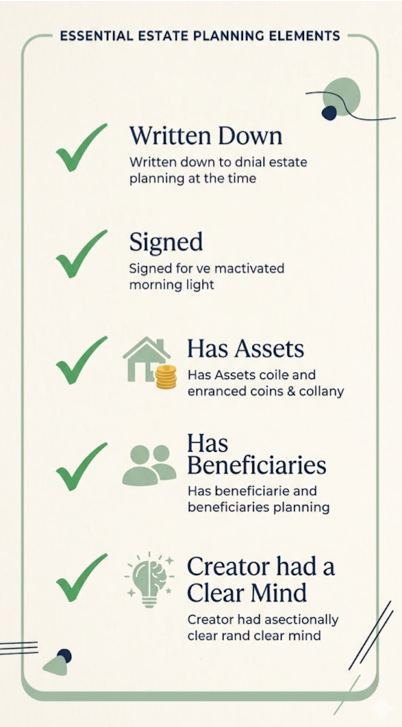
Here is a simple checklist based on what California courts and firms like Opelon LLP actually recommend.
- Get it in writing. Do not rely on verbal promises or notes on a napkin.
- Sign it cleanly. Sign in front of a notary when you can. It is not required, but it helps.
- Fund it. Retitle your house by recording a new deed in the trust’s name. Change bank and brokerage accounts. Update beneficiary forms where needed.
- Avoid red flags. Do not let the person drafting the trust become the main beneficiary. Do not make big changes right after a health crisis.
- Keep it current. Marriage, divorce, a new child, a big move — any of these should trigger a review.
- Know the 120-day rule. If you are a beneficiary and something looks wrong, you have 120 days from the trustee’s notice to challenge the trust. Do not wait.
Most of these steps cost nothing. They just take an hour of attention.
The Bottom Line
Remember that 40% number from the opening — four out of ten DIY California trusts were unfunded or half-funded? That is the single biggest reason families end up back in probate, the place a trust was supposed to help them skip. But now you know the real checklist: five basics under the Probate Code, proper funding, and no red flags around capacity or influence. Get those right, and your trust will hold up.
What to do this week: pull your trust out of the drawer. Check two things. First, is every big asset actually titled in the trust’s name? Second, does the trust language still match your life? If either answer is “I’m not sure,” book a 30-minute review with a California estate planning attorney. That conversation is the cheapest step in this entire guide.
FAQ Section
A trust can become invalid in California if it is missing a basic legal requirement, was not properly created, was signed by someone without capacity, or was affected by undue influence. A trust may also fail in practice if it was never funded, because an empty trust does not control the assets a family expects it to cover.
Trust funding is important because the trust only controls assets that have actually been transferred into it. If a house, bank account, or brokerage account was never titled in the trust’s name, the family may still need to go through probate even if the trust document itself exists.
Yes, lack of mental capacity can be a major reason to contest a trust or trust amendment. If a person changed a trust while dealing with dementia, serious illness, medication issues, or cognitive decline, beneficiaries may question whether the person understood what they were signing.
Undue influence can affect a California trust when someone pressures, controls, or manipulates the trust creator into making changes they would not have made freely. This often comes up when there are disinheritance and suspicious changes, especially if a caregiver, family member, or drafting party benefits unexpectedly.
If a trust clearly states a required method for amendments, that method usually needs to be followed. When the trust language is less strict, California courts may look more closely at whether the person’s intent was clear and whether the amendment met the applicable legal standard.
Yes, beneficiaries and other interested parties may be able to challenge an invalid trust in California. This is part of beneficiary rights and enforcement, especially when the trust appears to involve capacity concerns, undue influence, missing assets, or improper trustee conduct.
The 120-day deadline generally refers to the period after a trustee sends formal notice to beneficiaries. If someone believes the trust is invalid, they should act quickly because missing the deadline can limit or destroy the ability to bring a trust contest.
If a trust is declared invalid, the assets may pass under a prior valid trust, a will, or California’s default inheritance rules. In some cases, the estate may need to start probate and the court process to determine who legally receives the property.
Yes, an invalid trust can create disputes over trustee authority, trust administration for successor trustees, and whether a trustee should continue acting. If the trustee is not communicating or is distributing assets under a questionable document, beneficiaries may need legal help to compel distribution or action.
If someone suspects a California trust is invalid, they should gather the trust documents, notices, amendments, asset records, and any evidence of suspicious changes. They can contact The Legacy Lawyers or call (800) 840-1998 to discuss whether a trust contest, accounting demand, or other court action may be appropriate.
Disclaimer
This article references publicly available information from Opelon LLP, the California State Bar, the California Legislature, and the California Supreme Court and Courts of Appeal, including official code sections and published case decisions dated 2015 through April 2026. Cases referenced include Haggerty v. Thornton (2024), Butler v. LeBouef (2016), Estate of Ashlock (2020), and Meiri v. Shamtoubi (2022). All metrics and quotes are from documented sources. Results are specific to California and the facts of each case; outcomes in any individual matter may vary. This article is for informational purposes only and does not constitute legal advice. For current information, visit leginfo.legislature.ca.gov or consult a California-licensed estate planning attorney.
