

Under California Probate Code §16062, trustees are required to provide a formal accounting at least annually to every beneficiary entitled to current distributions. When a beneficiary makes a written request and the trustee fails to respond within 60 days, Probate Code §17200 gives the beneficiary the right to petition the court to compel the accounting — and the court can order sanctions, attorney’s fees, and even trustee removal for noncompliance. Despite these protections, trustee silence remains one of the most common triggers for trust litigation in California. Many beneficiaries spend months waiting for financial information they are legally entitled to receive, not realizing they have enforceable rights with specific deadlines and remedies. Here is the complete litigation roadmap for forcing a trust accounting when a trustee refuses to show the books.

What the Law Actually Requires: The Trustee’s Duty to Account
California imposes a statutory duty on trustees to keep beneficiaries informed. This duty is not optional, and it is not a courtesy — it is a fiduciary obligation enforceable by the probate court.
When an Accounting Is Required
Under Probate Code §16062(a), the trustee must provide an accounting in three situations: at least annually, upon a change of trustee, and at the termination of the trust. The accounting must go to each beneficiary to whom income or principal is required or authorized in the trustee’s discretion to be currently distributed.
Effective January 1, 2023, an amendment to Probate Code §15800(b) expanded these protections. When a person holding the power to revoke a trust is no longer legally competent, the successor trustee must provide a copy of the trust and annual accountings to all persons who would be entitled to distributions upon the incompetent trustor’s death — even if the trust is technically still revocable. This closed a significant loophole that had left many beneficiaries in the dark during a parent’s incapacity.
What an Accounting Must Contain
Probate Code §16063 specifies six elements that must appear in every trust accounting. A balance sheet and profit-and-loss statement do not qualify — trust accountings follow a format unique to probate law. The required elements are:
- A statement of receipts and disbursements of principal and income during the accounting period
- A statement of the trust’s assets and liabilities as of the end of the accounting period
- The trustee’s compensation for the accounting period
- A description of any agents hired by the trustee, their relationship to the trustee (if any), and their compensation
- A statement that the beneficiary may petition the court under §17200 to obtain a court review of the accounting and of the trustee’s acts
- A statement that claims against the trustee for breach of trust may not be made after three years from the date the beneficiary receives the accounting
That three-year limitations period in element six is critically important. Once a beneficiary receives a proper accounting, the clock starts running on any claims for breach of trust that the accounting reveals. Trustees who delay or refuse accountings are, intentionally or not, preventing the statute of limitations from ever beginning — which is exactly why courts take refusals seriously.
When the Trustee Does Not Have to Account
Not every beneficiary is entitled to an accounting in every circumstance. Understanding the exceptions prevents wasted effort and positions your demand correctly from the start.
Under Probate Code §16069 and §16064, a trustee is not required to account in the following situations:
- While the trust remains revocable and the trustor is alive and competent. This is the most common exception. If one parent has died but the surviving parent is competent and the trust is still revocable, the surviving parent’s children typically cannot demand a formal accounting. They may, however, request information under §16061.
- When the trust instrument contains a valid waiver of accounting. Many trust documents include language waiving the accounting requirement. However, a beneficiary can withdraw a written waiver at any time as to the most recent and all future accounts. And under §16062(e), any waiver is void and unenforceable if the sole trustee is a “disqualified person” described in §21380 — meaning a person who drafted the trust, transcribed it, or is a care custodian.
- When the beneficiary has waived the right in writing. Even this waiver can be withdrawn at any time for future accounts.
- Even where these exceptions apply, the court retains the power to compel an accounting if there is a showing that a material breach of trust has reasonably likely occurred. The exception is never absolute when misconduct is suspected.
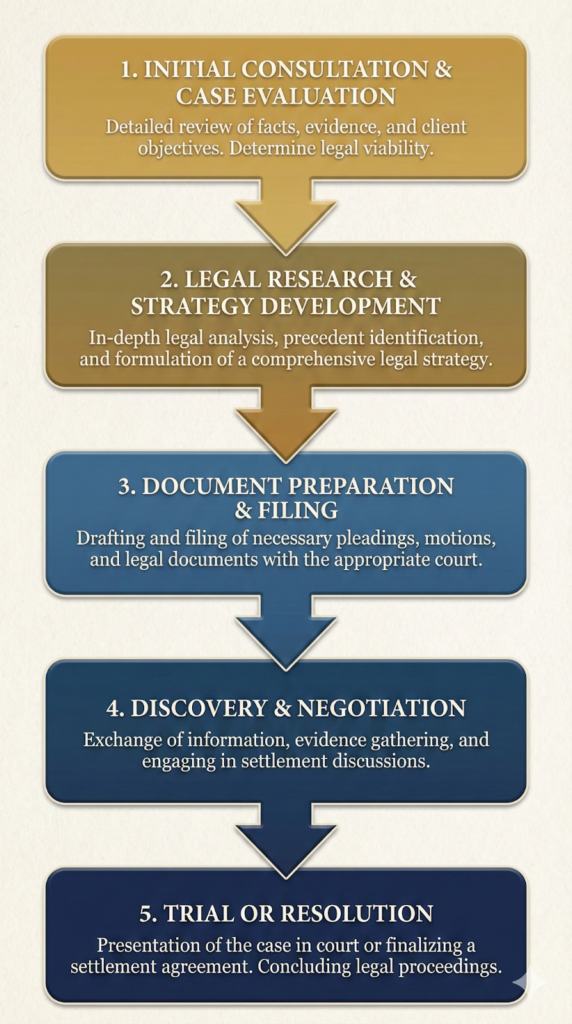
The Five-Step Process to Force a Trust Accounting
When a trustee ignores requests, stalls with excuses, or provides incomplete information, California law provides a structured path from demand to court order. The Legacy Lawyers’ litigation team follows this sequence, developed through handling hundreds of trust accounting disputes across Los Angeles, Orange County, and Southern California.
Step 1: Send a Formal Written Demand (Day 1)
The first step is a written demand sent via certified mail to the trustee’s last known address, explicitly requesting a formal accounting under Probate Code §16062 and information under §16061. The demand should cite the specific statutory provisions, identify the accounting periods for which records are being requested, and state that failure to comply within 60 days will result in a petition under §17200.
This letter serves two purposes. First, it creates a documented paper trail proving that the trustee received the request and establishing the exact date the 60-day clock begins. Second, it satisfies the statutory prerequisite under §17200(b)(6)(C), which allows a court petition only after the trustee has “failed to submit a requested account within 60 days after written request of the beneficiary and no account has been made within six months preceding the request.”
Step 2: Wait the 60-Day Statutory Period (Days 1–60)
The trustee has exactly 60 days to respond with a compliant accounting. During this period, The Legacy Lawyers’ team is not idle. The litigation team begins gathering available evidence independently: pulling publicly recorded property transfers from county recorder offices, obtaining trust-related court filings from the Superior Court, reviewing any prior informal financial reports the trustee may have provided, and identifying forensic accountants who can analyze the accounting once it is produced.
If the trustee provides an accounting during this period, the next question becomes whether the accounting complies with §16063. An accounting that omits required elements — such as trustee compensation, agent disclosures, or the §17200 petition notice — is not a compliant accounting, and the beneficiary retains the right to petition for a proper one.
Step 3: File a §17200 Petition to Compel Accounting (Day 61+)
If the trustee fails to respond or provides an inadequate accounting, The Legacy Lawyers files a petition under Probate Code §17200 in the appropriate Superior Court. The petition requests that the court order the trustee to prepare and submit a formal accounting complying with §16063, covering all periods for which no compliant accounting has been provided.
The §17200 petition can also request additional relief at the same time: an order compelling the trustee to provide trust information under §16061, an order requiring the trustee to make books, documents, and records available for inspection under §16065, and an award of attorney’s fees and costs incurred in bringing the petition. The Legacy Lawyers routinely combines these requests in a single petition, maximizing the relief obtained in one court appearance.
In Los Angeles County, §17200 petitions are heard in the Probate Division at Stanley Mosk Courthouse. Orange County hearings take place in the Probate Department at the Lamoreaux Justice Center in Santa Ana. Hearing dates are typically set 30 to 60 days after filing, depending on the court’s calendar.
Step 4: Court-Ordered Accounting and Forensic Review (Months 3–8)
Once the court orders the trustee to account, the trustee must comply within the timeframe specified in the order — typically 30 to 90 days. If the trustee fails to comply with the court order, the consequences escalate: contempt of court, monetary sanctions, and potential removal as trustee under §15642.
When the accounting is finally produced, The Legacy Lawyers’ forensic accounting partners examine five critical elements. They verify every deposit against tax documents and 1099 forms. They confirm all expenses comply with the trust’s terms and California law. They identify cash withdrawals exceeding $1,000, which may constitute red flags under federal banking reporting requirements. They trace all electronic transfers through financial institutions to detect unauthorized movement of funds. And they compare trustee fees against what the trust document authorizes and what is reasonable under California law.
Step 5: File Objections, Seek Surcharge, or Pursue Removal (Months 6–18)
If the accounting reveals problems — unexplained disbursements, undisclosed trustee compensation, self-dealing transactions, or missing assets — the litigation shifts from compelling transparency to pursuing remedies. The beneficiary can file formal objections to the accounting, asking the court to surcharge the trustee for any losses caused by the trustee’s breach. The beneficiary can file a separate petition for breach of fiduciary duty. And the beneficiary can petition for trustee removal under §15642.
If the accounting reveals that the trustee misappropriated trust assets in bad faith, the beneficiary can also pursue Probate Code §859 double damages for bad faith misappropriation — recovering twice the value of the wrongfully taken property on top of the return of the property itself.
The Accounting Waiver Problem — and Why It May Not Protect the Trustee
Many California trusts include a provision that waives the trustee’s duty to provide annual accountings. Beneficiaries who see this language often assume they have no right to financial information. That assumption is wrong in most litigation scenarios.
First, under Probate Code §16064(b), any written waiver by a beneficiary can be withdrawn at any time as to the most recent account and all future accounts. The withdrawal must be in writing, but once delivered, the trustee must resume accounting immediately.
Second, under §16062(e), an accounting waiver in the trust instrument is void and against public policy if the sole trustee is a “disqualified person” under §21380. This includes a person who drafted the trust or transcribed it while in a fiduciary relationship with the trustor, or a care custodian of a dependent adult. If the trustee falls into any of these categories, the waiver is legally unenforceable regardless of what the trust document says.
Third, even where a valid waiver exists, the court retains discretion under §16064(a) to compel an accounting whenever “it is reasonably likely that a material breach of the trust has occurred.” This means that if you can present evidence of potential misconduct — unusual transactions, unexplained delays in distributions, the trustee’s refusal to communicate — the court can override the waiver entirely.
Finally, the waiver only applies to the formal accounting under §16062. It does not waive the trustee’s duty to provide information under §16061 on reasonable written request, or the trustee’s duty to make books and records available for inspection under §16065. Even with a waiver in place, the trustee must still respond to written requests for information within 60 days.
Red Flags That Signal You Need to Demand an Accounting Now
Trust litigation attorneys at The Legacy Lawyers have identified specific patterns that consistently precede accounting disputes. If you recognize any of these warning signs that a trustee is acting wrongly, the formal demand process should begin immediately:
- The trustee has not communicated with beneficiaries for more than six months after a triggering event such as the settlor’s death or incapacity
- The trustee provides vague or incomplete financial information, such as a single-page spreadsheet rather than a formal §16063 accounting
- Trust distributions are delayed without explanation, or the trustee claims the trust “doesn’t have enough money” without providing documentation
- The trustee hired family members, friends, or business associates as agents or vendors to the trust without disclosing their compensation
- Real property held in the trust has been sold or transferred without notice to beneficiaries
- The trustee is living in trust property, using trust funds for personal expenses, or paying themselves fees not authorized by the trust document
- The trustee becomes defensive, evasive, or hostile when asked basic questions about trust finances
Three-Year Statute of Limitations: Why the Clock Matters
Once a beneficiary receives a compliant trust accounting, the statute of limitations begins running. Under the notice provision required by §16063(a)(6), claims against the trustee for breach of trust may not be made after three years from the date the beneficiary receives the accounting or report disclosing facts giving rise to the claim.
This creates a strategic dynamic that cuts both ways. For beneficiaries, it means you must review the accounting promptly and file any objections or breach claims within three years. For trustees, it means that refusing to account prevents the statute of limitations from ever starting — which is exactly why courts take a dim view of trustees who stonewall.
For the beneficiary, the practical lesson is clear: demanding the accounting is not just about getting information. It is about starting the clock on your right to challenge what the accounting reveals. The longer you wait to demand, the longer the trustee operates without accountability — and the harder it becomes to trace misappropriated funds.
Conclusion
California law provides a clear, enforceable path for beneficiaries to force a trust accounting when a trustee refuses to show the books. Under Probate Code §16062, the trustee must account annually. Under §16061, the trustee must respond to written requests for information. When the trustee fails to comply within 60 days, §17200 gives the beneficiary the right to petition the court — and the court can order the accounting, impose sanctions, award attorney’s fees, and remove the trustee entirely.
The process starts with a single step: a written demand sent by certified mail, citing the specific statutory provisions and establishing the 60-day clock. From there, every subsequent action — the court petition, the forensic review, the objections, the surcharge — flows from that initial demand letter. If a trustee is withholding financial information from you, the law is on your side. But the law only works if you use it.
Call The Legacy Lawyers at (800) 840-1998 to schedule a free consultation. Our litigation team will review your situation, determine which statutory rights apply, and draft the formal demand that starts the process of compelling full transparency.
FAQ SECTION
Can I force a trustee to provide an accounting in California?
Yes. Under Probate Code §17200, if a trustee fails to provide a requested accounting within 60 days of your written demand, you can petition the probate court to compel it. The court can order the accounting, impose sanctions, and award attorney’s fees.
How often must a California trustee provide an accounting?
Under Probate Code §16062, trustees must account at least annually, upon a change of trustee, and at trust termination, to each beneficiary entitled to current distributions. The accounting must contain six specific elements listed in §16063.
What if the trust document waives the accounting requirement?
A waiver can be withdrawn by the beneficiary in writing at any time. Under §16062(e), waivers are void if the sole trustee is a disqualified person under §21380. And courts can override any waiver if there is evidence a material breach of trust has likely occurred.
What happens if a trustee ignores a court order to provide an accounting?
The trustee faces contempt of court, monetary sanctions, potential removal under Probate Code §15642, and personal liability. Courts take noncompliance with accounting orders seriously because the accounting duty is fundamental to the trustee-beneficiary relationship.
How long do I have to challenge a trust accounting once I receive it?
Three years from the date you receive the accounting or report disclosing facts giving rise to your claim. This is why trustees who delay or refuse accountings effectively prevent the statute of limitations from starting — and why courts compel compliance.
DISCLAIMER
This article references publicly available information including California Probate Code sections 15642, 15800, 16060, 16061, 16062, 16063, 16064, 16065, 16069, 17200, and 21380; the 2023 amendment to Probate Code §15800(b); case summaries and analysis published by the California State Bar Trusts & Estates Section, The Legacy Lawyers, Stimmel Law, and the Orange County Estate Planning Lawyer Blog, dated 2009–2026. All statutory citations are from the current California Probate Code as published by the California Legislative Information website. Results described are specific to the statutes and procedures cited and may vary based on jurisdiction, trust terms, and circumstances. For current information about trust litigation services, consult The Legacy Lawyers directly at thelegacylawyers.com.
