

The holidays bring families together—but they also create the perfect conditions for inheritance protection disputes to take root. According to the American Psychological Association, 89% of Americans experience stress during the holiday season, with 22% specifically anticipating family conflict. When you combine emotionally charged gatherings with aging parents, unresolved family tensions, and significant assets, the risk of undue influence and inheritance manipulation increases dramatically.
This guide examines how California families can recognize warning signs, understand their legal protections under state law, and take proactive steps to safeguard their inheritance during vulnerable holiday periods.
What Undue Influence Looks Like: Real-World Patterns

California law provides one of the nation’s clearest definitions of undue influence. According to California Welfare and Institutions Code Section 15610.70(a), undue influence means “excessive persuasion that causes another person to act or refrain from acting by overcoming that person’s free will and results in inequity.” The American Bar Association has praised California’s undue influence statute as a national model for its clarity and balance.
The holiday season creates unique vulnerability. Family gatherings often involve alcohol, emotional conversations about the future, and extended access to elderly relatives. Research from Hackard Law notes that inheritance disputes often become “the new battlefield on which old fights continue,” with tensions intensifying when tangible assets become involved.
Consider this pattern: A caregiver sibling who has spent the year providing daily support may use holiday gatherings to isolate an aging parent from other family members. They might arrange private conversations, control access to the parent, or introduce last-minute changes to estate documents while other relatives are distracted by celebrations.
California Probate Code Section 86 establishes four factors courts evaluate when determining undue influence:
- The vulnerability of the victim (age, illness, cognitive impairment, emotional distress)
- The influencer’s apparent authority over the victim
- The tactics and actions employed by the influencer
- The equity of the challenged result
Courts evaluate these factors together. A single uncomfortable conversation doesn’t constitute undue influence—but patterns of isolation, manipulation, and sudden document changes raise serious concerns.
How California Law Protects Beneficiaries
In 2014, California strengthened its undue influence protections significantly. The revised Probate Code incorporated elder abuse definitions into estate law, creating stronger tools for families challenging suspicious estate changes.
One of the most powerful protections involves caregivers. California Probate Code Section 21380 creates a presumption of undue influence when certain individuals receive inheritance benefits. This includes anyone who drafted the estate documents, individuals in fiduciary relationships with the deceased, and—notably—caregivers who provided services to dependent adults.
The 2019 amendments expanded these protections further. If a caregiver “commenced a marriage, cohabitation, or domestic partnership” with a dependent adult while providing care services, any inheritance to that caregiver is presumed to be the product of undue influence.
What this means practically: If your parent’s caregiver suddenly appears in the will or trust, California law shifts the burden of proof. The caregiver must prove by “clear and convincing evidence” that no manipulation occurred. According to KJMLAW Partners, this presumption exists because caregivers hold “considerable influence and power over seniors” and some will “abuse this power for their own gain.”
The time limits matter. Under California law, beneficiaries have 120 days from receiving notice of a trust to contest its validity. If a copy of the trust document isn’t provided upon request, an additional 60 days applies. Missing these deadlines can permanently bar your claim.
Measurable Impact: The Scale of Inheritance Disputes
The statistics reveal why vigilance matters:
Financial losses are staggering. The National Council on Aging reports that elder financial abuse causes $28.3 billion in losses annually. A FinCEN analysis from 2024 found that financial institutions file nearly 16,000 reports monthly related to elder financial exploitation.
Most perpetrators are family members. According to NCOA data, family members are perpetrators in nearly 47% of elder abuse incidents. Adult children represent the most frequent perpetrators in elder theft cases according to FinCEN’s 2024 analysis.
Underreporting is severe. The National Adult Protective Services Association estimates that only 1 in 44 cases of financial elder abuse is ever reported. A 2023 AARP study found that 87.5% of elder financial abuse cases never reach authorities.
Estate planning gaps compound the problem. Caring.com’s 2025 Wills and Estate Planning Study found that only 24% of Americans have a will—down from 33% in 2022. When individuals die without clear estate documents, family disputes become far more likely.
The LegalShield study from 2023 found that without proper estate planning, 58% of respondents had experienced family disputes or had assets fall under court control. As estate planning attorney Laurie Humphrey noted, “As financial advisors, we should be holistic in looking at their entire financial picture.”
Warning Signs During Holiday Gatherings
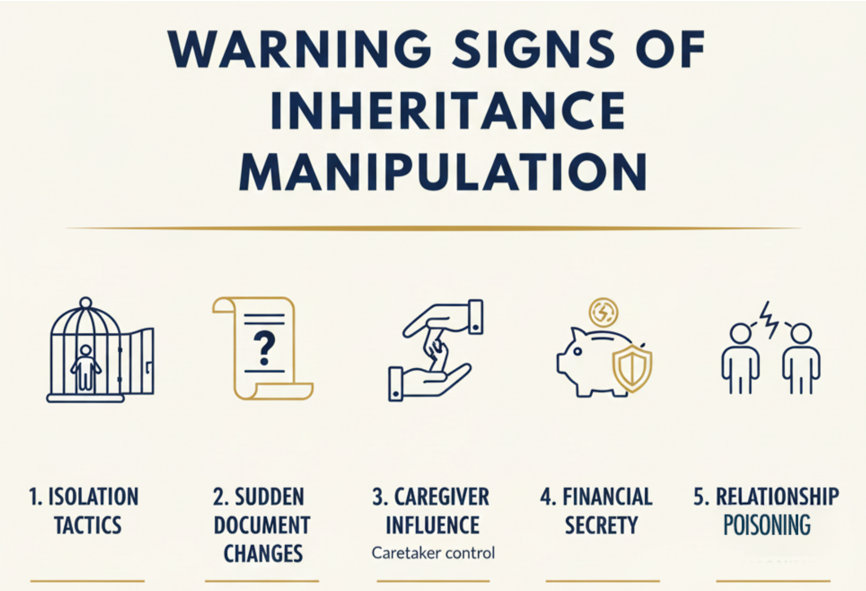
Estate litigation attorneys identify consistent patterns that signal potential inheritance manipulation. During holiday gatherings, watch for:
Isolation tactics. One family member controls access to an elderly parent, intercepting conversations or insisting on “protecting” them from stressful discussions. According to research cited by Gokal Law Group, “isolation from family members” is a primary method influencers use to gain control.
Sudden document changes. Learning that estate plans were recently modified—especially if changes disproportionately benefit one person—warrants attention. As trust litigation attorney Porrazzo explains, changes made “shortly before the decedent’s passing or when they were in a vulnerable state” constitute strong evidence of inheritance theft.
Information gatekeeping. One sibling controls all information about a parent’s finances, health decisions, or legal matters while deflecting questions from other family members.
Relationship poisoning. Disparaging comments about other family members, suggesting siblings don’t care about the parent, or creating conflict between the elderly person and their other children.
Caregiver dependency. A caregiver has gradually assumed control over daily decisions, financial access, and healthcare choices while other family members have been excluded from these conversations.
Unexplained financial activity. Evidence of unusual spending, new joint accounts, or changes to beneficiary designations on retirement accounts or life insurance policies.
White Oak Wills & Trusts notes that “fear and insecurity often play a role” in these situations. Potential heirs may worry about financial stability and take preemptive actions to secure what they believe is rightfully theirs.
Practical Protection Strategies

Protecting your inheritance requires action before problems escalate. Based on documented methodologies from California estate litigation, consider these approaches:
Request transparency early. Ask aging parents to share their estate planning intentions with all family members. Research shows that open communication reduces disputes. The 2025 Caring.com survey found that among those without wills, 20% have at least discussed wishes with loved ones—a starting point that reduces later conflict.
Document concerning behavior. Keep records of troubling conversations, changes in a parent’s accessibility, or unusual financial requests. Estate attorneys emphasize that maintaining a “paper trail” becomes critical evidence if litigation becomes necessary.
Verify estate documents independently. If possible, confirm that estate planning was conducted through reputable attorneys. In one case described by Albertson & Davidson, a respected estate planning firm refused to draft a new trust because they “suspected that [a sibling] was unduly influencing” the parent—and the sibling then found a non-specialist attorney to draft suspicious documents.
Understand fiduciary obligations. If a family member serves as trustee, they have legal duties under California Probate Code Sections 16000-16015. These include administering the trust with reasonable care, keeping detailed records, and providing periodic accountings to beneficiaries.
Know your deadlines. The 120-day window to contest a California trust begins when you receive notice. Consult an attorney immediately if you have concerns about document validity.
Consider mediation early. Sacramento probate judges encourage early case management and mediation for undue influence claims. Since these disputes involve “emotionally sensitive issues,” early resolution often benefits everyone.
When to Seek Legal Intervention
Not every family disagreement rises to the level of undue influence. California courts are “reluctant to invalidate testamentary documents unless there is a compelling reason to do so,” according to Loew Law Group.
However, certain circumstances warrant immediate legal consultation:
- An elderly parent suddenly changes estate documents after a health crisis or loss of a spouse
- A caregiver or one family member has systematically isolated the parent from others
- You discover the parent was in a “vulnerable state” when signing new documents
- Significant assets have been transferred outside the estate plan
- A non-family attorney or unfamiliar law firm prepared recent documents
California provides specific remedies. You can file a petition in probate court challenging trust or will validity. Courts can freeze assets during investigation, compel accountings from trustees, and award attorneys’ fees to successful challengers when undue influence is proven.
The Probate Pro notes that “the courtroom is where you can restore fairness when family dynamics and greed tilt the scales.”
Moving Forward with Confidence
The intersection of holiday stress and inheritance concerns affects countless California families. The American Psychological Association found that 41% of Americans report higher stress levels during the holidays compared to other times of year—creating exactly the emotional vulnerability that bad actors exploit.
But California law provides robust protections. The state’s undue influence statutes, caregiver presumption rules, and clear procedures for challenging suspicious documents give families powerful tools to protect their inheritance.
If you witnessed concerning behavior during holiday gatherings, don’t wait. The 120-day deadline for contesting trusts moves quickly. Document what you observed, gather any evidence of unusual document changes or financial activity, and consult with an experienced California estate litigation attorney who can evaluate your specific situation.
Your family’s legacy deserves protection—during the holidays and throughout the year.
FAQ SECTION
What is undue influence under California law?
California Welfare and Institutions Code Section 15610.70(a) defines undue influence as “excessive persuasion that causes another person to act or refrain from acting by overcoming that person’s free will and results in inequity.” Courts evaluate vulnerability, influencer authority, manipulative tactics, and whether results seem unjust.
How long do I have to contest a trust in California?
You have 120 days from receiving the statutory notice of trust to file a contest. If the trustee doesn’t provide a copy of the trust document upon request, an additional 60 days applies. Missing these deadlines may permanently bar your claim.
Does California law presume undue influence in caregiver situations?
Yes. California Probate Code Section 21380 creates a presumption of undue influence when caregivers receive inheritance benefits. The caregiver must prove by “clear and convincing evidence” that no manipulation occurred—a significant advantage for challenging beneficiaries.
What are common signs of inheritance manipulation during holidays?
Warning signs include isolation of elderly family members, sudden estate document changes, one person controlling all financial information, disparagement of other family members, and unexplained financial activity or new joint accounts.
How much does elder financial abuse cost families annually?
The National Council on Aging estimates elder financial abuse causes $28.3 billion in annual losses. FinCEN reports that financial institutions file approximately 16,000 elder financial exploitation reports monthly, with adult children being the most frequent perpetrators.
DISCLAIMER
This article references publicly available information from the National Council on Aging, American Psychological Association, California Courts, FinCEN, Caring.com, AARP, and LegalShield, including official documentation, press releases, and published studies dated 2022-2025. All metrics and quotes are from documented sources. Information presented is specific to California law and may vary based on individual circumstances, case complexity, and judicial discretion. This article is for informational purposes only and does not constitute legal advice or create an attorney-client relationship. For current information about California estate law and your specific situation, consult directly with The Legacy Lawyers.
